Film Intro: “Serial Mom” [MAC Birmingham, 31/08/24)

In her July 2024 essay for CrimeReads, Julia Sirmons notes that “Serial Mom opens with title cards that mimic the typical true crime disclaimers: the film was based on interviews and witness testimony. And then,” she says, “there’s the kicker: “Some of the innocent characters’ names have been changed in the interest of a larger truth.’” As Sirmons notes, the quotation marks work in two ways: to protect crime fiction from liability, and to make a case for its own cultural legitimacy. “Waters,” she continues, “mimicking this, makes his satire reveal larger truths about American values and obsessions.”

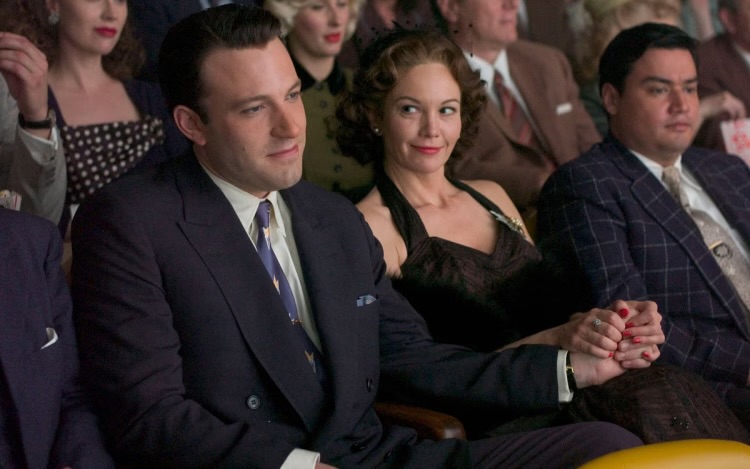
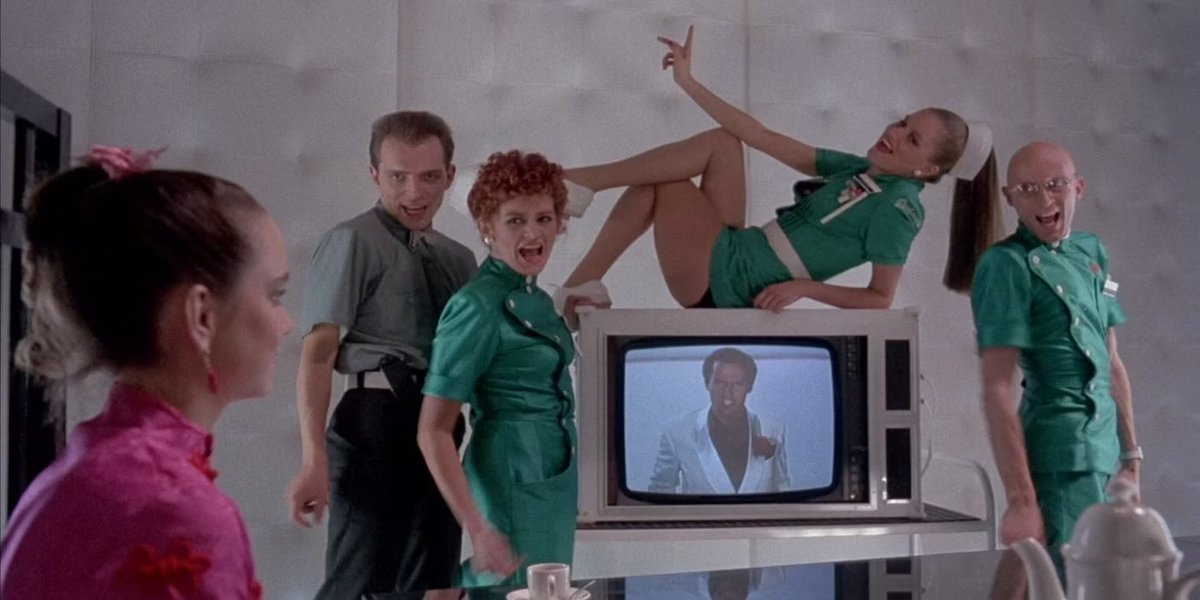
To say a filmmaker like John Waters relishes skewering various facets of human nature and family values—including obsessions with true crime and celebrity culture—would be an understatement, and we, his rapt audience, take perverse pleasure in his pride. This is perhaps why 1994’s Serial Mom, Waters’ satirical black comedy about a seemingly mild-mannered housewife with a murderous disposition, was the perfect vehicle for the provocateur affectionately dubbed the “Pope of Trash”, an auteur who takes every opportunity to expose the seedier and more perverted side of suburbia. Serial Mom is one of Waters’ best, yet it is seldom screened or broadcast; reviews were mixed at the time of release, and the film tanked at the box office (it grossed nearly $8 million). Yet Waters’ scathing comedic satire has since become a much-loved cult classic and favourite.

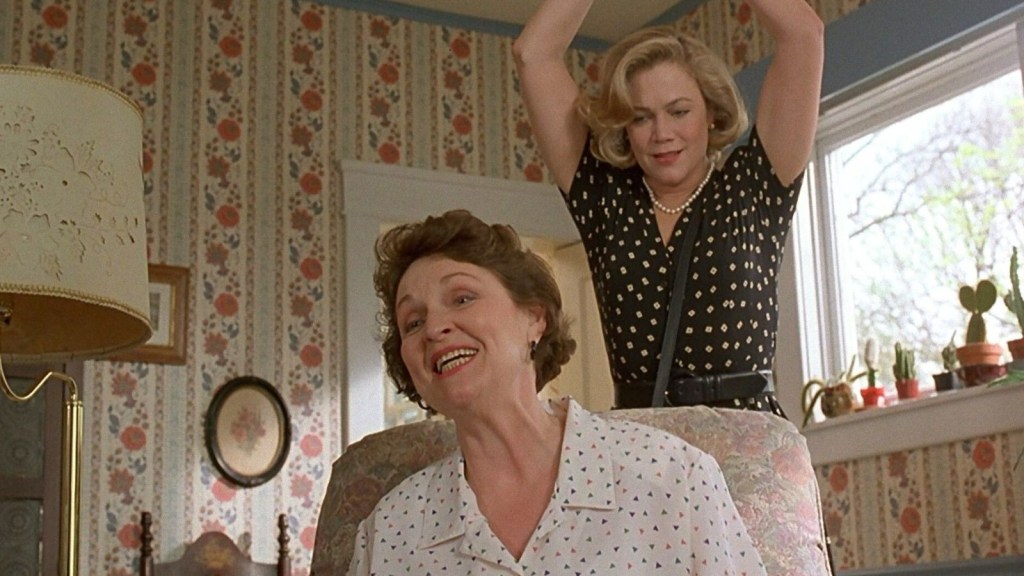
Serial Mom stars Kathleen Turner as Beverly Sutphin, alongside a supporting cast of Sam Waterston, Ricki Lake, and a pre-Scream Matthew Lillard as her on-screen family. The many cameos include heiress/fugitive Patty Hearst, the late actress and author Suzanne Somers—who appears as a fan hoping to portray her “feminist heroine” in a made-for-TV movie about Beverly’s life—alongside comedian/legend Joan Rivers, former porn star and actress Traci Lords, and Warhol Factory member Brigid Berlin. Both Lake and Lords are Waters darlings, having appeared in Cry Baby four years earlier.

On the surface Beverly is a polite and unassuming upper-middle-class housewife to her dentist husband and a doting mother to their teenage children, living in Towson, Maryland. (Waters likes to keep things loyal to his native Baltimore). However, as we know—whether via David Lynch’s Blue Velvet or the television series Desperate Housewives—never to be fooled by the niceties of suburbia and a white picket fence. Behind the perky demeanour, pie baking, and pinafores, Beverly is a phone-pranking, gore-loving, cold-blooded serial killer with a simple code: if you annoy her, she will murder you—and she will murder in broad daylight, on the high school grounds, or in the men’s bathroom of the local mall— for “perceived crimes against polite society,” whether that is wearing white after Labor Day or failing to rewind a rented VHS tape. Yet Beverly has no qualms in dirtying things closer to home, whether that be a neighbour who stole her parking space, a teacher criticising her son’s interest in horror films, or a love rat standing her daughter up for a date. Some might say she is a protective mother with her family’s interests at heart and no time for criticism of her children, qualities of a good and nurturing matriarch but executed (quite literally) in a manner that says otherwise. However, unlike most of the mothers in the MAC’s series of Motherhood on Screen, Beverly is the only one with serial killer paraphernalia under her mattress.

It is curious to think that Meryl Streep, Kathy Bates, Glenn Close, and even international treasure Julie Andrews had been considered for the role, but Turner is fantastic as Beverly, putting everything and then some into her portrayal. For the film’s inspiration, Waters’ drew on work by Doris Wishman, Otto Preminger, William Castle, and Herschell Gordon Lewis, and rather than conceal these influences, we see examples of their films playing on television sets at various points during Serial Mom. However, the audio we hear of Ted Bundy’s voice is not that of the jailed convicted murderer but the voice of Waters himself.

Having made his name in the early 1970s with transgressive cult films that riff on comedy and surrealism Waters has given us Multiple Maniacs (1970), Pink Flamingos (1972), Female Trouble (1974), Hairspray (1988) (which was later adapted into a hit Broadway musical and a 2007 musical film), as well as Polyester (1981), Cry-Baby (1990), Serial Mom (1994), Pecker (1998), and Cecil B. Demented (2000). Not one for subtlety, Waters never does things by half. Yet his work has such style and humour, and Serial Mom remains as riotous, fresh, and funny as it was thirty years ago. It’s impossible not to titter when Turner is pranking Waters’ long-time collaborator, Mink Stole, with the most over-the-top, preposterous insults, yielding—much like the rest of Serial Mom—some laugh out loud hilarious moments.

In her article, Sirmon noted the comparisons between the fictional Beverly and the factual Betty Broderick, a wealthy suburban mother who killed her ex-husband and his new wife after an acrimonious divorce in a murder case that gripped America’s fascination. “If Broderick,” Sirmon writes, “a picture-perfect Super Mom, could suddenly “snap” and become a killer, what were other seemingly-contended housewives capable of?”

Work Work: “A Wounded Fawn”

I had the great pleasure and honour of writing the BluRay booklet essay for Travis Stevens’ Surrealism-inspired A Wounded Fawn!. You can pre-order via the Vinegar Syndrome website right now! https://vinegarsyndrome.com/products/a-wounded-fawn

Film Intro: “Grey Gardens” [MAC Birmingham 20/07/2024]

In 1972, Lee Radziwill—the younger sister of Jackie Bouvier Kennedy Onassis—pitched a documentary about her East Hampton childhood home to the American documentary makers and siblings Albert and David Maysles. She took the brothers with her on a trip to Grey Gardens, a mansion designed in 1897 by Joseph Greenleaf Thorpe and so-called because of the colour of the dunes, the concrete garden walls, and the sea mist. In Grey Gardens, her aunt and cousin lived.

The Beale women, mother and daughter, both named Edith Bouvier Beale—or “Big Edie” and “Little Edie”—were once members of New York City’s high society, but a series of circumstances saw them withdraw from city life and live a more isolated existence together for over fifty years at Grey Gardens, which had devolved into a complete state of disrepair. Their lives in this crumbling house, surviving on limited funds and living in increasing poverty, were at odds with the glamour of the Kennedy dynasty and the affluence of the Hamptons, which has a historic reputation as home to the wealthy and summer playground to the rich. The Beales lived in such appalling living conditions—flea infestations, cats co-habiting with raccoons, no running water, and surrounded by rubbish and rot—that following an inspection by the local health department (which the Beales referred to as “raids”), Grey Gardens featured in such contrasting publications as tabloid rag the National Enquirer *and* as a New York Magazine cover story. In 1972, with eviction and the City threatening to demolish Grey Gardens, Jackie O and Radziwill provided the necessary funds to stabilize and repair the dilapidated house, hoping it would meet village codes.

Big Edie—a former socialite and singer—and her estranged lawyer/financier husband, Phelan Beale, has purchased Grey Gardens in the early 1920s. The couple separated in 1931 and were legally divorced in 1946, with Phelan notifying his wife of the divorce via telegram. Big Edie was given Grey Gardens plus child support for their daughter and two sons (but no alimony), so relied on financial support from her family and continued to give local recitals, which did not pay exceptionally well. During the late 1940s, when Big Edie’s health started to decline, Little Edie—by now a thirty-something former debutante who had spent five years unsuccessfully pursuing an acting career in Manhattan—left her life to live permanently at Grey Gardens. A dutiful daughter bound to her now ailing mother. Her brothers, obviously, had no such obligations.

The Maysles immediately expressed interest in these women–their past and present lives and Grey Gardens—and received permission to film a documentary about the Beales. While Radziwill funded what has since become known as the first, shelved, lost version of the film in 1972, the brothers returned to Grey Gardens in 1974 without Radziwill’s financial support. In 1976, Grey Gardens was released to great acclaim and screened at that year’s Cannes Film Festival (but not entered into the main competition).

Given the subject matter and the squalor the Beales lived in, ethical issues continue to circumnavigate the film, including the exploitation of what many consider to be two mentally ill women. When asked about this in a 2014 interview with the Hollywood Reporter, Albert Maysles responded so:

“As someone with a background in psychology, I knew better than to claim [the Beales] were mentally ill. Their behavior [sic] was just their way of asserting themselves. And what could be a better way to assert themselves than a film about them asserting themselves? Nothing more, nothing less. It’s just them. They were always in control.”

For the women, financial issues were also in play. In 2018, The Telegraph reported that “[The Beales’] reasoning for allowing the cameras in was also practical: they were in dire need of money.” The Beales were compensated for their cooperation—how much is up for debate—yet it’s a vicious cycle because some documentarians believe that paying subjects for their time skewers how they portray themselves and hinders their authenticity on screen.

Grey Gardens leaves you debating whether Big Edie guilt-tripped her daughter into coming home to live with her mother or whether Little Edie was given no choice but to return home out of social obligation. If you read between the lines, you can see a mother who believes her children ruined her singing career and a daughter who was coerced back home and prevented the opportunity to live a rich, independent life of her own. They clearly love one another, but their lives are filled with nostalgia, regret, lost opportunities, and “what could have beens.” Their daily arguments are fierce and constant—conversations become explosive before simmering down again, bubbling away until the next one. In one tense exchange, Little Edie says, “I suppose I won’t get out of here until she dies or I die. I don’t like it. I like freedom.” “Well,” her mother responds, “you can’t have it.”

These themes were explored in the 2009 film Grey Gardens, which starred Jessica Lange as Big Edie and Drew Barrymore as Little Edie and was broadcast on HBO. The non-linear film flashes back and forth over the years between Little Edie’s life as a young debutante in 1936, moving in and co-habiting with her mother at Grey Gardens estate, and the filming and premiere of the documentary. This version of Grey Gardens won six Primetime Emmys and two Golden Globes.

In 2010, Grey Gardens was selected by the Library of Congress for preservation in the United States National Film Registry as being “culturally, historically, or aesthetically significant.” In 2012, the documentary topped the list of 100 greatest documentary films of all time by PBS through public voting, and in 2014, a Sight and Sound poll of film critics voted Grey Gardens the tenth-best documentary film of all time. The Beales and the film continue to be referenced in various media.

Big Edie died of pneumonia at Southampton Hospital in Southampton, New York, on 5 February 1977. In 1979, following her mother’s death, Little Edie sold Grey Gardens—on the condition the mansion would not be razored—to Sally Quinn and her husband, longtime Washington Post editor Ben Bradlee, who restored the house and grounds, living at Grey Gardens for 35 years until Bradlee died in 2014. In 2017, after renting out the property, Quinn sold Grey Gardens to fashion designer Liz Lange and her husband, who extensively remodelled the house and surrounding gardens. Like the film that made it famous, Grey Gardens continues to survive.

Little Edie died in Florida in January 2002 at the age of 84. Before Big Edie passed away, Little Edie is said to have asked if her mother had any final words. “There’s nothing more to say,” Big Edie replied. “It’s all in the film.”

Film Intro: “The Idiots” [MAC Birmingham 10/09/23]

Lars von Trier’s 1998 pitch-black comedy-drama The Idiots, I won’t deny, is a tricky one to introduce and probably the most volatile of LvT’s films. It was the first to be made in total accordance with the Dogme 95 Manifesto (as established in previous weeks, Breaking the Waves was the first film he completed following the manifesto’s conception). The Idiots, often called Dogme # 2, is also the second in LvT’s Golden Heart Trilogy, succeeding Breaking the Waves and preceding Dancer in the Dark.

While Luis Buñuel’s 1972 Discreet Charm of the Bourgeois was about disrupting a well-to-do couple’s lavish dinner party in Surrealist style, it was funny rather than offensive. In Kristoffer Borgli’s 2022 film Sick of Myself,  a young woman called Signe (played brilliantly by Kristine Kujath Thorp) starts taking illegal drugs to make herself ill in a quest for celebrity. Sick of Myself was often rip-roaringly funny for showcasing the inherent narcissism prevalent in the social media age, and while it was called shallow in parts, human beings are frequently shallow people who thrive on attention, which made Signe’s narcissist devices to gain fame so funny. We could say that The Idiots paved the way for such a nihilistic satire, albeit in a very confrontational, controversial, and extreme way.

In every Lars von Trier film, he asks us to confront something deeply uncomfortable about the human condition: in Antichrist, it is grief and violence. In Breaking the Waves, the limits of faith and love. While it is impossible to shy away from The Idiots’ incredibly provocative and offensive subject matter and brazen bad taste, von Trier’s iconoclasm and taboo-shattering work still exposes sociological behaviour codes, ideas of normalcy, and conditioned emotional responses.

As divisive now as when it was released in 1998, The Idiots was nominated for a prestigious Palme d’Or at the Cannes Film Festival AND booed and criticised for its subject matter. In brief terms, the film is about a group of able-bodied people who, in seeking their ‘Inner Idiots,’ take on attributes of disabled people in public. 

Filmed in four days and with a largely non-narrative and improved script, the film begins with Karen (Bodil Jørgensen), a polite, shy, quiet, severely unhappy woman – with a delicacy not unlike Emily Watson as Bess in Breaking the Waves – who is eating lunch in a restaurant alongside a group of disabled adults. While the other diners look on, aghast at their behaviour, Karen’s kindness and curiosity lead one of the group, Stoffer (Jens Albinus), to take a shine to her. Karen, who, through her own desires and actions – they don’t force her – goes back to their residence, where she learns the truth: this is all an act, Stoffer is house-sitting for his rich Uncle while the house is on the market, and the group take turns to (disgracefully) act out various forms of disability in public to, as they claim, free themselves from the trappings of their day to day lives. 

Stoffer is cultish in his self-appointed leadership role, and while the others leave their inner Idiot at the commune’s door, Stoffer believes they should take it home to their families and let it into their personal lives. This is one example where the group is not as unified as first thought, and one of the ways they start to splinter as a unit. Another occurs when a commune member invites a group of individuals with Down’s syndrome to tea at the house. Stoffer storms off while the others display genuine tenderness, compassion, and kindness towards these strangers. At that moment, it appears Stoffer has become one of the very individuals in the restaurant he was attempting to rail against. 

The film does have one of two genuinely funny moments not hinged on their unacceptable behaviour. When the group visits a factory, and the foreman gets Stoffer to drive the van home, it’s funny because seeing someone drive a vehicle non-fatally into bushes is always funny. There are also jaw-dropping moments of graphic nudity and sex. But at the same time, putting these moments of hilarity into a film such as this implies von Trier is pointing to the audience by saying, “Yes, these people are deplorable, their actions are abhorrent, yet you are still finding moments of humour.” 

But underneath it all, there is a tragedy, as many of these people have been broken by various situations in their personal lives and found freedom and community in this group of people’s unacceptable actions. Karen’s is by far the most interesting story – a broken woman in a deep pit of grief who has found the family and affection she craves and a form of therapy through the group. This culminates in a powerful final scene after Karen returns to the home she originally fled, revealing both the grief that sent her running, and the healing she achieved in this community.