Film Intro: “Grey Gardens” [MAC Birmingham 20/07/2024]

In 1972, Lee Radziwill—the younger sister of Jackie Bouvier Kennedy Onassis—pitched a documentary about her East Hampton childhood home to the American documentary makers and siblings Albert and David Maysles. She took the brothers with her on a trip to Grey Gardens, a mansion designed in 1897 by Joseph Greenleaf Thorpe and so-called because of the colour of the dunes, the concrete garden walls, and the sea mist. In Grey Gardens, her aunt and cousin lived.

The Beale women, mother and daughter, both named Edith Bouvier Beale—or “Big Edie” and “Little Edie”—were once members of New York City’s high society, but a series of circumstances saw them withdraw from city life and live a more isolated existence together for over fifty years at Grey Gardens, which had devolved into a complete state of disrepair. Their lives in this crumbling house, surviving on limited funds and living in increasing poverty, were at odds with the glamour of the Kennedy dynasty and the affluence of the Hamptons, which has a historic reputation as home to the wealthy and summer playground to the rich. The Beales lived in such appalling living conditions—flea infestations, cats co-habiting with raccoons, no running water, and surrounded by rubbish and rot—that following an inspection by the local health department (which the Beales referred to as “raids”), Grey Gardens featured in such contrasting publications as tabloid rag the National Enquirer *and* as a New York Magazine cover story. In 1972, with eviction and the City threatening to demolish Grey Gardens, Jackie O and Radziwill provided the necessary funds to stabilize and repair the dilapidated house, hoping it would meet village codes.

Big Edie—a former socialite and singer—and her estranged lawyer/financier husband, Phelan Beale, has purchased Grey Gardens in the early 1920s. The couple separated in 1931 and were legally divorced in 1946, with Phelan notifying his wife of the divorce via telegram. Big Edie was given Grey Gardens plus child support for their daughter and two sons (but no alimony), so relied on financial support from her family and continued to give local recitals, which did not pay exceptionally well. During the late 1940s, when Big Edie’s health started to decline, Little Edie—by now a thirty-something former debutante who had spent five years unsuccessfully pursuing an acting career in Manhattan—left her life to live permanently at Grey Gardens. A dutiful daughter bound to her now ailing mother. Her brothers, obviously, had no such obligations.

The Maysles immediately expressed interest in these women–their past and present lives and Grey Gardens—and received permission to film a documentary about the Beales. While Radziwill funded what has since become known as the first, shelved, lost version of the film in 1972, the brothers returned to Grey Gardens in 1974 without Radziwill’s financial support. In 1976, Grey Gardens was released to great acclaim and screened at that year’s Cannes Film Festival (but not entered into the main competition).

Given the subject matter and the squalor the Beales lived in, ethical issues continue to circumnavigate the film, including the exploitation of what many consider to be two mentally ill women. When asked about this in a 2014 interview with the Hollywood Reporter, Albert Maysles responded so:

“As someone with a background in psychology, I knew better than to claim [the Beales] were mentally ill. Their behavior [sic] was just their way of asserting themselves. And what could be a better way to assert themselves than a film about them asserting themselves? Nothing more, nothing less. It’s just them. They were always in control.”

For the women, financial issues were also in play. In 2018, The Telegraph reported that “[The Beales’] reasoning for allowing the cameras in was also practical: they were in dire need of money.” The Beales were compensated for their cooperation—how much is up for debate—yet it’s a vicious cycle because some documentarians believe that paying subjects for their time skewers how they portray themselves and hinders their authenticity on screen.

Grey Gardens leaves you debating whether Big Edie guilt-tripped her daughter into coming home to live with her mother or whether Little Edie was given no choice but to return home out of social obligation. If you read between the lines, you can see a mother who believes her children ruined her singing career and a daughter who was coerced back home and prevented the opportunity to live a rich, independent life of her own. They clearly love one another, but their lives are filled with nostalgia, regret, lost opportunities, and “what could have beens.” Their daily arguments are fierce and constant—conversations become explosive before simmering down again, bubbling away until the next one. In one tense exchange, Little Edie says, “I suppose I won’t get out of here until she dies or I die. I don’t like it. I like freedom.” “Well,” her mother responds, “you can’t have it.”

These themes were explored in the 2009 film Grey Gardens, which starred Jessica Lange as Big Edie and Drew Barrymore as Little Edie and was broadcast on HBO. The non-linear film flashes back and forth over the years between Little Edie’s life as a young debutante in 1936, moving in and co-habiting with her mother at Grey Gardens estate, and the filming and premiere of the documentary. This version of Grey Gardens won six Primetime Emmys and two Golden Globes.

In 2010, Grey Gardens was selected by the Library of Congress for preservation in the United States National Film Registry as being “culturally, historically, or aesthetically significant.” In 2012, the documentary topped the list of 100 greatest documentary films of all time by PBS through public voting, and in 2014, a Sight and Sound poll of film critics voted Grey Gardens the tenth-best documentary film of all time. The Beales and the film continue to be referenced in various media.

Big Edie died of pneumonia at Southampton Hospital in Southampton, New York, on 5 February 1977. In 1979, following her mother’s death, Little Edie sold Grey Gardens—on the condition the mansion would not be razored—to Sally Quinn and her husband, longtime Washington Post editor Ben Bradlee, who restored the house and grounds, living at Grey Gardens for 35 years until Bradlee died in 2014. In 2017, after renting out the property, Quinn sold Grey Gardens to fashion designer Liz Lange and her husband, who extensively remodelled the house and surrounding gardens. Like the film that made it famous, Grey Gardens continues to survive.

Little Edie died in Florida in January 2002 at the age of 84. Before Big Edie passed away, Little Edie is said to have asked if her mother had any final words. “There’s nothing more to say,” Big Edie replied. “It’s all in the film.”
Film Intro: “The Idiots” [MAC Birmingham 10/09/23]

Lars von Trier’s 1998 pitch-black comedy-drama The Idiots, I won’t deny, is a tricky one to introduce and probably the most volatile of LvT’s films. It was the first to be made in total accordance with the Dogme 95 Manifesto (as established in previous weeks, Breaking the Waves was the first film he completed following the manifesto’s conception). The Idiots, often called Dogme # 2, is also the second in LvT’s Golden Heart Trilogy, succeeding Breaking the Waves and preceding Dancer in the Dark.

While Luis Buñuel’s 1972 Discreet Charm of the Bourgeois was about disrupting a well-to-do couple’s lavish dinner party in Surrealist style, it was funny rather than offensive. In Kristoffer Borgli’s 2022 film Sick of Myself,  a young woman called Signe (played brilliantly by Kristine Kujath Thorp) starts taking illegal drugs to make herself ill in a quest for celebrity. Sick of Myself was often rip-roaringly funny for showcasing the inherent narcissism prevalent in the social media age, and while it was called shallow in parts, human beings are frequently shallow people who thrive on attention, which made Signe’s narcissist devices to gain fame so funny. We could say that The Idiots paved the way for such a nihilistic satire, albeit in a very confrontational, controversial, and extreme way.

In every Lars von Trier film, he asks us to confront something deeply uncomfortable about the human condition: in Antichrist, it is grief and violence. In Breaking the Waves, the limits of faith and love. While it is impossible to shy away from The Idiots’ incredibly provocative and offensive subject matter and brazen bad taste, von Trier’s iconoclasm and taboo-shattering work still exposes sociological behaviour codes, ideas of normalcy, and conditioned emotional responses.

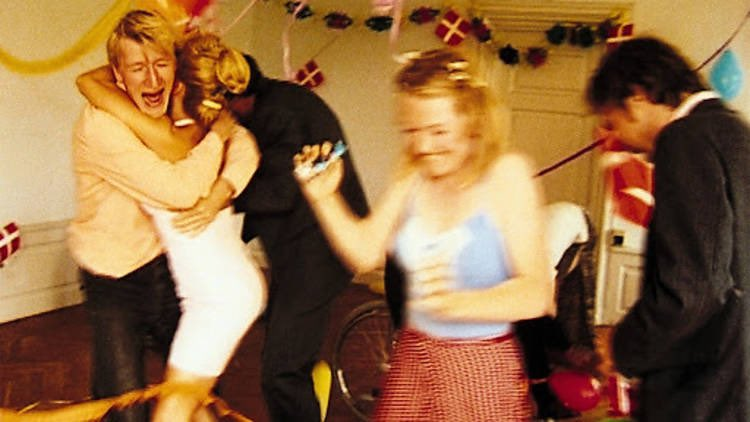
As divisive now as when it was released in 1998, The Idiots was nominated for a prestigious Palme d’Or at the Cannes Film Festival AND booed and criticised for its subject matter. In brief terms, the film is about a group of able-bodied people who, in seeking their ‘Inner Idiots,’ take on attributes of disabled people in public. 

Filmed in four days and with a largely non-narrative and improved script, the film begins with Karen (Bodil Jørgensen), a polite, shy, quiet, severely unhappy woman – with a delicacy not unlike Emily Watson as Bess in Breaking the Waves – who is eating lunch in a restaurant alongside a group of disabled adults. While the other diners look on, aghast at their behaviour, Karen’s kindness and curiosity lead one of the group, Stoffer (Jens Albinus), to take a shine to her. Karen, who, through her own desires and actions – they don’t force her – goes back to their residence, where she learns the truth: this is all an act, Stoffer is house-sitting for his rich Uncle while the house is on the market, and the group take turns to (disgracefully) act out various forms of disability in public to, as they claim, free themselves from the trappings of their day to day lives. 

Stoffer is cultish in his self-appointed leadership role, and while the others leave their inner Idiot at the commune’s door, Stoffer believes they should take it home to their families and let it into their personal lives. This is one example where the group is not as unified as first thought, and one of the ways they start to splinter as a unit. Another occurs when a commune member invites a group of individuals with Down’s syndrome to tea at the house. Stoffer storms off while the others display genuine tenderness, compassion, and kindness towards these strangers. At that moment, it appears Stoffer has become one of the very individuals in the restaurant he was attempting to rail against. 

The film does have one of two genuinely funny moments not hinged on their unacceptable behaviour. When the group visits a factory, and the foreman gets Stoffer to drive the van home, it’s funny because seeing someone drive a vehicle non-fatally into bushes is always funny. There are also jaw-dropping moments of graphic nudity and sex. But at the same time, putting these moments of hilarity into a film such as this implies von Trier is pointing to the audience by saying, “Yes, these people are deplorable, their actions are abhorrent, yet you are still finding moments of humour.” 

But underneath it all, there is a tragedy, as many of these people have been broken by various situations in their personal lives and found freedom and community in this group of people’s unacceptable actions. Karen’s is by far the most interesting story – a broken woman in a deep pit of grief who has found the family and affection she craves and a form of therapy through the group. This culminates in a powerful final scene after Karen returns to the home she originally fled, revealing both the grief that sent her running, and the healing she achieved in this community.

Film Intro: “Antichrist” [MAC Birmingham 09/09/23]

In 2006, Lars von Trier was hospitalised for depression and started writing Antichrist, the first film in what would become known as his “Depression Trilogy.” (Melancholia followed in 2011, and Nymphomaniac in 2013). 

Filmed in 40 days on a 4K digital camera, Antichrist was the first of LvT’s films to be shot entirely in Germany and was heavily influenced by horror – the director had watched the Japanese horror films Ring and Dark Water, although he is reluctant to describe Antichrist as a horror film (yet it is often labelled as art horror or psychological horror). At the same time, Von Trier had watched a documentary about European forests which detailed the violence of nature, and how these beautiful places are dark landscapes of pain. For LvT, nature “represents pure Hell,” yet people are still content to hang paintings of it in their homes. 

Antichrist is about a couple, Willem Dafoe and Charlotte Gainsbourg — credited as “He” and “She” — who retreat to the woods, or Eden, after the tragic accidental death of their infant son. The tragedy plays out in a breath-taking prologue, or opening sequence, as the couple are having sex in their home. The powerful black and white scene has no dialogue but is scored to Lascia Ch’io Pianga from Handel’s opera Rinaldo (the translation of Lascia Ch’io Pianga is “let me weep.”) Von Trier would use the aria again in Nymphomaniac (which starred Gainsbourg and featured Dafoe in Vol. 2). 

After “She” collapses at the funeral and spends a month in hospital under the diagnoses of atypical grief, “He” — a therapist with a distrust of psychoanalysis — has his wife discharged from hospital and takes it upon himself to counsel her himself (clearly a bad idea for a greiving father). His course of action is exposure therapy — making her confront her greatest fears to overcome her grief — and seeing as her second greatest fear is nature, they hike to the cabin in the woods where she had spent the previous summer with their son writing her since abandoned thesis. But through this journey of mourning, something wild and sinister is unleashed, and the film powerfully explores themes including sexual violence, sadomasochism, and the untamed wild power of nature.

There is also, obviously, a religious angle, “He” and “She” / Adam and Eve —but whatever your interpretation, it is a film rooted in mourning and despair.

Eva Green had been originally approached for the lead, and despite her determination to do the film, her agents would not permit it. In von Trier’s words, “Charlotte came in and said, ‘I’m dying to get the part no matter what.’ So I think it was a decision she made very early and she stuck to it. We had no problems whatsoever.” Gainsbourg has said she knew little of von Trier before their first meeting, although she knew his films and was highly anxious before they met in person. She was also concerned about the film’s more emotional sequences because LvT’s leads often go to very dark, frequently violent and/or intense places. She was also worried about depicting her character’s panic attacks and anxiety as she had experienced them herself.

Dafoe had previously worked with von Trier in 2005’s Manderlay, and had contacted the director to ask what he was working on around the time Antichrist was in its infancy. Of the role, Dafoe said, “I think the dark stuff, the unspoken stuff is more potent for an actor. It’s the stuff we don’t talk about, so if you have the opportunity to apply yourself to that stuff in a playful, creative way, yes, I’m attracted to it.” 

Antichrist, as is the pattern with LvT’s films, polarised its audience when it premiered at the 2009 Cannes Film Festival — there were walkouts and a handful of fainters. When questioned at the film’s press conference, von Trier commented that he had no need to justify the film because the audience were his guests and “not the other way around,” and claimed to be the best director in the world. The ecumenical jury at the Cannes festival gave the film a special “anti-award,” declaring Antichrist “the most misogynist movie from the self-proclaimed biggest director in the world,” yet Charlotte Gainsbourg still won the festival’s award for Best Actress.

In a tragic line from the film to Gainsbourg’s personal life, her sister, the British fashion photographer Jane Barry, whose work appeared in numerous commercial magazines and newspapers (including Vogue and The Sunday Times Magazine), as well as collaborations with their mother (the late Jane Birkin) and sisters, died as a result of a fall from her fourth-floor apartment in the 16th arrondissement of Paris on 11 December 2013. So here you have a very sad connection to the film. Some of the images and Barry’s death may also remind you of the murder of artist Ana Mendieta.

Antichrist is a viewing experiences that stays with you. Numerous friends and acquaintances say once watched, they don’t need to watch it again for maybe a decade — or ever again — much like Gaspar Noé’s 2002 Irrévervisble (which starred Vincent Cassel and Monica Bellucci). Incidentally, there is another link to Noé, and something we can connect to the witch-hunts mentioned in Antichrist. In 2019, Gainsbourg worked with Noé on his experimental short film Lux Æternal alongside Betty Blue star Béatrice Dalle, both playing fictional versions of themselves (Dalle is directing Gainsbourg in a film in this case). The film begins with a short montage of 1920s-style documentary footage of witch torture, and features Gainsbourg in a witch-burning scene. Lux Æternal concludes with a Luis Buñuel quote which I believe is relevant to Antichrist: “Thank God I’m an Atheist.”

Film Intro: “Breaking the Waves” [MAC Birmingham 01/09/2023]

Breaking The Waves

In 1995, the controversial filmmaker Lars von Trier founded the Dogme 95 filmmaking movement with fellow Danish director Thomas Vinterberg. Dogme 95 was about creating films based on the traditional values of story, acting, and theme while excluding the use of elaborate special effects or technology – essentially a way for filmmakers to reclaim their power from the studios. While Breaking the Waves was the first film von Trier made after Dogme 95 and was inspired by its code, it wasn’t the first made in it’s vision (that title went to 1998’s The Idiots) because sets were built, music was added in post op, and computer graphics were used for the chapters title cards. However Breaking the Waves was shot entirely on Super35mm handheld camera which provides its naturalistic element, and is divided into chapters and an epilogue, with each chapter card filmed with a motionless camera but featuring movement in the panorama. In the original released theatrical cut, the epilogue featured David Bowie’s “Life on Mars,” later replaced by Elton John’s “Your Song” on early home video releases. The more recent Criterion edition restores the Bowie song.

Breaking the Waves was the first of von Trier’s films to feature a female protagonist (his earlier works have been said to “typically feature a disillusioned male idealist brought down by a deceitful woman”), and he would continue to write female leads in subsequent works. Yet von Trier’s female protagonists are often mired in controversy. Bess from Breaking the Waves is one such example.

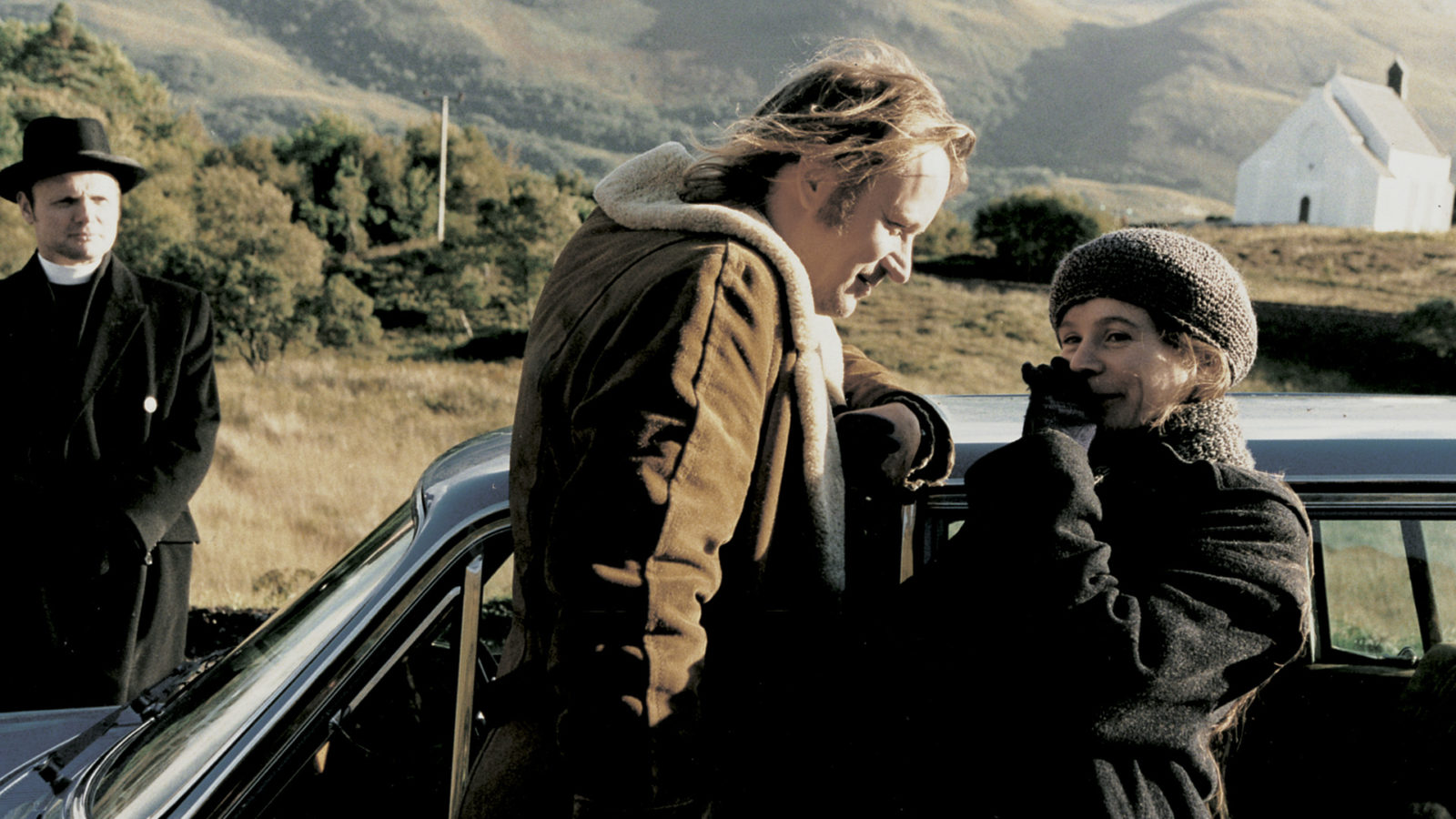
Bess (played by the extraordinary Emily Watson) is a fragile young woman living in a religious and isolated Scottish town who has a history of mental health issues following her brother’s death. A woman of intense faith who converses with God, Bess is very pure, somewhat childlike, and fundamentally a good person – she is even described as being “good” in the film, and sometimes being too good a person has consequences. 

Bess’ image and fragility are why her marriage to Jan (Stellan Skarsgård), a trawler man working on a rig and not originally from the Island, is met with some disapproval from the local community. But Bess is besotted with Jan – he is her sexual awakening, she’s very clingy with him, and she finds it unbearable how his work takes him away from her for long periods of time. She says she “loves him too much.” 

Early in their marriage, and early in the film, Jan becomes paralysed following an accident at work. No longer able to physically satisfy his wife, Jan encourages Bess to sleep with other men and tell him about her adventures. When Bess relents to Jan’s voyeuristic desires, and Jan shows signs of improvement, she starts to believe her husband’s recovery is contingent on her actions. In convincing herself she has the power to heal, Bess essentially martyrs herself out of overwhelming love and devotion to her husband.

Some critics viewed Bess as a self-sacrificing submissive heroine and misogynist cliché, while von Trier’s themes of female sexual perversity, phallocentrism, and martyrdom – which would be continued in subsequent works – were also criticised. Yet what makes Breaking the Waves such an enthrallingly beautiful (and tough in parts, that’s undeniable) viewing experience is due to Watson, who is a force as Bess – an Academy Award nominated force – in what was, stunningly, her feature film debut. Watson is a beautifully physical actor (she does something similar in Anand Tucker’s Hilary and Jackie in her role of Jackie du Pré), and you see Bess’ physicality alter throughout the film depending on who she is with at any given time. Watson was actually expelled from the London College of Philosophy and Economic Science for taking on this role due to its graphic themes and nudity (the very reasons Helena Bonham Carter dropped out of the production), which is ironic given how Bess is ostracised by society in the film.

Huge praise must also be given to the late Katrin Cartlidge as Dorothy or the affectionately nicknamed “Dodo”, who plays Bess’ sister-in-law. A frequent collaborator of Mike Leigh who was due to play Patricia Clarkson’s roll in Dogville, the immensely talented Cartlidge tragically passed away in 2002 at the age of 41 due owing to complications from pneumonia and septicaemia (stemming from a pheochromocytoma). Dodo is Bess’ closest companion, a nurse in the hospital who is caring for Jan, and she is Bess’s pragmatic voice of reason.

Von Trier has often said he is an atheist, and wanted to make a naturalistic film that was also religious – Bess even compares herself to Mary Magdeleine at one point – but for it to be a film without any miracles. Breaking the Waves is often described as magical realism, and there is certainly a fantastical, almost spiritual, element, built-in. Undeniably, there are some gorgeous moments of metaphysical magic. 

Essentially, Breaking the Waves is a beautiful, shattering, film about love, devotion, the power and limits of faith, and the investment of belief to help the people you love.

Film Intro: “Imitation of Life” (1959) [MAC Birmingham, 30/06/24]

There is no melodrama like a Douglas Sirk melodrama, and Imitation of Life (1959) is no exception. It’s a powerful film, a key Sirk text, and a potent story about motherhood, race, class, and gender. To quote the BFI, “Douglas Sirk’s final Hollywood feature is a remake of John Stahl’s [1934] film of Fannie Hurst’s novel about two single mothers, one white, one black, striving together in a man’s world. It focuses, with typically sharp irony and intelligence, on issues of racial prejudice and inequality.”

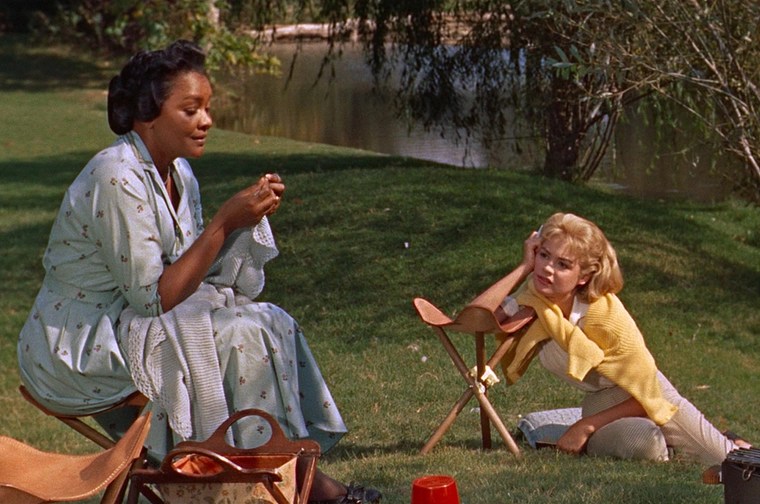
Imitation of Life film centres on two sets of mothers and daughters, the Merediths (who are white) and the Johnsons (who are Black). In the opening scene, the young girls meet on the beach, and instantly become best friends. Susie has gone wandering from her mother to play with Sarah Jane, and this is where Lora (Lana Turner) finds her daughter, in Annie’s (Juanita Moore’s) care. Lora assumes Sarah Jane is white and Annie’s is her black babysitter, and is suprised to learn Sarah Jane is Annie’s fair-skinned multiracial daughter. On learning Annie and Sarah Jane have nowhere to stay, Lora invites them home for the night, but the close friendships between both sets of mothers and daughters build and bind, and we see this unit — this family —over the next eleven years as the girls mature.

In the other mother, both girls find something they desire, and what their own maternal figure lacks: Susie longs for her mother’s love rather than her actress mother’s glamour and fame, while Sarah Jane deliberately performs whiteness to achieve a higher quality of life – not out of distain for her mother, but survival as a part-black woman in a white man’s world. As Claire White wrote in her piece ‘The kids are not alright: Imitation of Life, “in many coming-of-age stories, white girls such as Susie are afforded the luxury to have relatively trivial concerns, whereas girls of colour such as Sarah Jane have bigger, societal issues to deal with.” As White continues, “while Sarah Jane (played as a teenager by Susan Kohner) tries to live a life of her own, far, far away from her darker-skinned mother who is always at home, Susie (Sandra Dee) just wants to talk about boys, kissing and algebra with her mother, who has become a successful Broadway actress and thus is never around.”

Over the course of the film, Sarah Jane perpetuates the fallacy that she is white and is constantly annoyed when Annie continues to kindly point people to the truth. When Sarah Jane’s race is discovered by a boy, with upsetting consequences, both mothers and daughters have a different perception of what this means and where the blame lies.

Sirk was keen to provide the Annie–Sarah Jane relationship in his version with more screen time and intensity than the characters were given in the 1930s versions of the story, and the critical consensus was that Juanita Moore and Susan Kohner (who was born to Roman Catholic mother of Irish and Mexican descent and a Czech Jewish father) stole the film from Lana Turner (which, as you will see, they did). The on-screen mother and daughter were individually nominated in the Best Supporting Actress category at both the Academy Awards and Golden Globes of 1959 with Kohner winning The Globe for her performance. Sirk said that he had deliberately and subversively undercut Turner to draw focus toward the issues of the two black characters, and his treatment of racial and class issues is admired for its perceptiveness of the times.

While their problems are very different, both sets of mothers and daughters have a degree of disconnect, and this is indicative of the time as the generational divide of 1950s America increased the sense of alienation between youth and adults. This has been echoed by the sociologist Kenneth Keniston, who in 1965 wrote that “the rapid advancement in technology meant that the future for the youth of that era was more unknowable and uncertain than for any generation before it.” And we see this divide between Lora and Annie, and Susie and Sarah Jane, who lacking the guidance they seek at home in the care of their mothers, find “it is only through distance from the home that they can forge their own path.” There is a moment when Annie apologises for loving her daughter “too much,” but still — as painful as it is — understands that she can only live her life and forge her independent identity if she sets her free. There is an unspoken bond between them, although Sarah Jane isn’t aware of its significance before it’s too late.

While Sirk’s version of Imitation of Life was not especially well-reviewed upon its original release —  it was compared to a soap opera and deemed inferior to its 1934 predecessor — it became the sixth highest-grossing film of 1959, making $6.4 million. It’s now far more famous than Stahl’s version and is considered a masterpiece of Sirk’s American career. The critic Emanuel Levy wrote that “one of the four masterpieces directed in the 1950s, the visually lush, meticulously designed and powerfully acted Imitation of Life was the jewel in Sirk’s crown, ending his Hollywood’s career before he returned to his native Germany.”

Imitation of Life is a film that endures, and continues to inspire various contemporary works of media. Todd Haynes’s 2002 film Far from Heaven is a homage to Sirk’s films, notably All That Heaven Allows (1955) and Imitation of Life, while R.E.M.’s 2001 song “Imitation of Life” took its title from the film (despite none of the band members having seen it). Additionally, the 1969 Diana Ross & the Supremes song “I’m Livin’ in Shame” is based on the film, and in 2015, BBC Online ranked the film as the 37th greatest American movie ever made, based on a survey of film critics.

Film Intro: “Now, Voyager” (1942) [MAC Birmingham, 23/06/24]

In an essay for Criterion titled ‘Mother Monster,’ the academic and writer Ella Taylor states, “Now, Voyager’s real badass mom, and not in a good way, is a snobby Boston Brahmin played with quietly rabid conviction by British actress Gladys Cooper. Mrs. Henry Vale is a prime example of how melodrama of the period rendered the horrid mothers in classic fairy tales—the witch, the wicked stepmother, the predatory crone.”  And in Now, Voyager, we have arguably the doyen of bad mothers.

Now, Voyager was one of the biggest hits of the maternal melodramas Hollywood made during World War II, as studios sought to spotlight mothers as cinematic role models for women at a time when some were war widows raising children alone, some were embarking on extramarital trysts in the absence of their own partners, while others were basking in their newfound independence as they stepped into workplace jobs previously done by men. Directed by Irving Rapper and based on a 1941 novel by Olive Higgins Prouty, Now, Voyager stars Bette Davis as Charlotte Vale, a middle-aged “frump” whose is under the thumb and command of her overbearing mother. Mrs Vale describes Charlotte, who she had given birth to during her forties, as “a child of my old age.” At one point she says, “of course it’s true that all late children are marked. Often such children aren’t wanted. That can mark them. I’ve kept her close by me always. When she was young, foolish, I made decisions for her. Always the right decisions.”

Charlotte’s sister-in-law, who fears Mrs Vale is driving Charlotte towards a mental breakdown, introduces Charlotte to the protective, kind, and liberal psychiatrist Dr. Jaquith (Claude Rains), who observes Mrs Vale’s control over her daughter’s life and recommends Charlotte spends some time away in his sanatorium. “My dear Mrs Vale,” Jaquith says as he smoothly confronts her, “if you had deliberately and maliciously planned to destroy your daughter’s life, you couldn’t have done it more completely.”

After discharge and reluctant to return home, Charlotte embarks on a literal journey of discovery in the form of a life-changing cruise, where – away from her mother – she blossoms into the picture of chic independent woman. Those of you who have seen the film before will be aware of the famous tracking shot of Davis on her return. She is a woman transformed by liberation, and the reveal of Charlotte’s new appearance – where she emerges looking very much like Bette Davis the movie star, and with a newfound sense of personal assuredness. When asked by Mrs Vale what she plans to do with her life on her return home, Charlotte irks her traditional mother by saying she will “get a cat and a parrot and live alone in single blessedness.” But Charlotte’s independence also brings the most human of hardships, a complicated love affair in the form of desire for an unhappily married father Jerry (Paul Henried), and — through a twist of fate, a chance meeting an encounter Jerry’s young daughter, Tina, with who Charlotte forms a significant bond, taking on the role of a compassionate and sympathetic surrogate mother to the troubled girl with mother issues of her own.

Of course, Mrs Henry Vale would not be such a menacing and formidable screen presence without the talent, diction, and sternness Academy Award Winner Gladys Cooper brings to the role. British born Dame Gladys Constance Cooper, DBE, had an illustrious career spanning seven decades, starting out as a teenager in Edwardian musical comedy and pantomime, before moving to dramatic roles and silent films before the First World War. Between 1917 and 1934, Cooper managed the Playhouse Theatre – where she also starred in various roles – and from the early 1920s won praise playing the lead in productions by W. Somerset Maugham and Noel Coward (amongst others) on the London stage. Cooper turned to cinema full-time in 1940, where she found Hollywood success cast in roles as aristocratic and disapproving society woman (although, granted, did was offered opportunities to play more personable, approachable women, as she did opposite Laurence Olivier’s Maxim de Winter in Rebecca (1940). Coopers various cinematic mothers, which pinnacled in Now, Voyager, also include a socialite mother in Kitty Foyle (1940), Laurence Olivier’s spurned wife in That Hamilton Woman (1941), Deborah Kerr’s tormentor mater in Delbert Mann’s Separate Tables (1958).

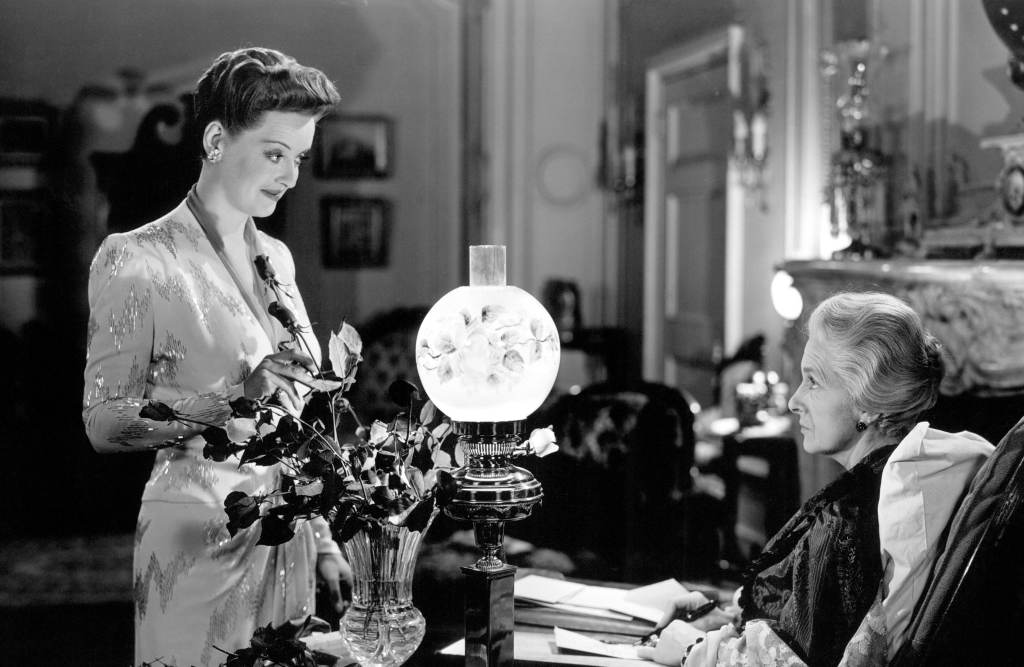
Yet, for all its success, Now, Voyager is both ambivalent towards motherhood, and in general mothers did not fare well at the pictures during this time, as cinemagoers preferred other variations of womanhood on screen. Ironically Davis would herself portray an overbearing mother in The Little Foxes and a mother surrogate of sorts All About Eve, as the star who takes the fame hungry newcomer under her wing only to be dethroned. Taylor notes that you can tell Davis was all-too aware and not entirely convinced by the characterisation of Charlotte, Davis as “rather too cool and aloof a cat to entirely persuade as a woman who ends up wanting self-sacrificing motherhood even more than she desires a passionate liaison.”

In Now, Voyager, we take pleasure in seeing Charlotte gain autonomy over the film. Still, in our gratification, we may also wonder about the events that lead to Mrs Vale’s nastiness and ponder what, or who exactly, in Taylor’s words, “mistreated the monster.”

Film Intro: Juliet Bashore’s “Kamikaze Hearts” (1986) [MAC Birmingham, 13/01/24]

Juliet Bashore’s groundbreaking docu-fiction Kamikaze Hearts is very much a product of a very specific period of the late 80s – not only in content, but also cinematic and cultural legacy. Released just prior to the more marketable and popular New Queer Cinema of the 1990s, Kamikaze Hearts’s taboo subject matter (pornography, graphic sex, and drug use), not to mention unstable genre categorisation and potted release history, scuppered the film’s from achieving canon status. But a 2022 release from Kino Lorber and rounds on various festivals’ restoration circuits courtesy of such organisations as Cinema Rediscovered (also known as CineRedis) have brought the film a new audience – and deserving so, because it’s a film that should be seen by a wider audience. 
 
In Kamikaze HeartsSharon ‘Mitch’ Mitchell and Tigr Mennett navigate their relationship as two active participants in the adult entertainment industry while filming a porn parody of Bizet’s opera ‘Carmen’. The production is riddled with set backs and problems, and we see how the filming impacts the couple’s relationship alongside the manipulation, abuse, and the excesses of the underground porn world during the 1980s. 
 
Bashore conceived the idea for the 1986 American quasi-documentary film as a filmmaking student working as an assistant director on a documentary about the porn industry in San Francisco, which is where she met Tigr. Tigr was head over heels in love with Mitchell, and in Bashore’s words, Tigr’s ‘idea of doing this homage to this woman that she was in love with—just came together perfectly. And that’s how it started.’
 
While multiple elements of Kamikaze Hearts are genuine, the ‘Carmen’ parody and the leading couple’s arguments were scripted and storyboarded, which assists to blur the line between truth and reality. The film straddles a fine line between fact and fiction – its alternative title is ‘Fact or Fiction’ – and this remains a thorough line throughout the film. Plus, Mitchell never appears to be “off” and is constantly performing. At one point she says, ‘I get paid to wait around between shots. I don’t get paid to act. I do that all the time.’
 
Bashore spoke to ScreenSlate in 2022 about the film’s fluctuating perceptions, and it’s tease between documentary and fiction, saying, 
 

‘I’ve learned to describe it differently depending on who the audience is because, from the very beginning, it was totally misunderstood. And I finally just gave in and said, Okay, it’s a documentary. I mean, people wouldn’t understand that it wasn’t really a documentary. When it first got picked up on the festival circuit it was stuck in the documentary section, and there was nothing I could do. They insisted that it was a documentary. So, I’ve learned to describe it in a way that I think the audience is gonna be able to understand, but that’s transformed. The audience is so different now and, in a way, I’m not used to talking to an audience that totally gets the way in which it is a documentary and isn’t a documentary. That’s not confusing at all to audiences now.’

 
The initial critical response for Kamikaze Hearts was varied, but Bashore’s filmmaking was consistently lauded, and the film has achieved something of a reappraisal in recent years. Some of the positive reviews included Kevin Thomas for the Los Angeles Times, who praised Bashore for ‘wisely’ allowing individual viewers to decide which portions are true. Liz Galst of Boston’s Gay Community News called Kamikaze Hearts “amazingly powerful,” notably Mitch and Tigr’s relationship and how pornographic performers navigate the lines between fiction and reality and went on to herald Bashore for being “at the forefront of U.S. non-fiction filmmaking”. But even the less favourable reviews could not deny the indelible images and people who linger long after the closing credits role.
 
As Bashore told ScreenSlate, ‘my film is about the layers of fantasy that surround that. It’s not about the the pornographic image so much as it is [about] all the layers, this other kind of striptease that’s going on, this psychic striptease.’
 
Aside from being an time capsule of a very specific time and an insightful depiction of the porn industry, part of Kamikaze Heart’s enduring nature – aside from Bashore’s lens – is due to Sharon Mitchell, who is one of the most charismatic screen presences you’ll encounter: glamourous, uninhibited, charming, cosmopolitan, a woman in command of her power who knows how to use her power. Mitchell made approximately 1,000 pornographic films over a 20-year career, including 38 as a director, but in 1996 she quit drugs, became a certified addiction counsellor, and obtained a MA and a PhD from the Institute for Advanced Study of Human Sexuality. Now a credited sexologist, in 1998 Mitchell founded the adult industry’s first mass testing service, which served practically every working performer in the US for 15 years, testing over 1000 performers per month (before being shut down due to data leak in 2011). That’s a film in itself.

*Film introduction for at Midlands Arts Centre, Birmingham, January 13 2024.