*The screening was cancelled due to tech problems, but here’s my intro*
Beth B. has been a vital figure of the New York underground scene since the late 1970s, with a body of film work including documentary, experimental, and narrative – and sometimes a combination of all three.
‘filmmaking has always been about power and control, and confronting the oppression of the patriarch. It’s definitely from a female point of view, it’s about the female gaze, and that’s why most of my films have very powerful women.’
Beth B.’s breakthrough films, which include Black Box (1978), Vortex (1981), and The Offenders (1980) – all co-directed with her then-husband Scott B. – have been screened at such famed New York venues as Max’s Kansas City, CBGB’s, the New York Film Festival, and Film Forum, and have since been shown at – and acquired by – the Whitney Museum and MoMA. Her early work appeared in Celine Danhier’s 2009 documentary film Blank City, alongside work by Jim Jarmusch and Amos Poe, and more recently produced and directed 2019’s The War Is Never Over, a documentary about iconic performance artist and frequent collaborator Lydia Lunch. Speaking to Hyperallergic about Vortex’s status as the last new wave film made, she said:
‘What I’m doing is still No Wave. It’s a rejection of what is, and it’s embracing what is not: what we don’t see, what we don’t hear. My mode is to really bring those things to the fore.’
Salvation! – with the secondary title Have You Said Your Prayers Today? (1987) – was Beth B.’s first solo feature (she has made two solo features) and features a distinctive soundtrack featuring Cabaret Voltaire, Arthur Baker, and New Order (who did the theme) – the sort of film you will find on cult or restoration strands of festival circuits or television in the small hours.
In Beth B.’s glossy 80s parody of televangelism, unemployed, non-religious factory worker Jerome Stample (Viggo Mortensen) ropes in his sister-in-law (Dominique Davalos), to abduct and blackmail a sex-obsessed TV minister, Rev Randall (Stephen McHattie). Events take a bonkers turn when Randall meets Jerome’s religious wife, Rhonda (played by Exene Cervenka of the punk band X), and is immediately convinced she is an evangelical rock star in the making.
Salvation! is wild, scathing, and oddly prophetic because it was made before – but released after – the real-life scandals of televangelists Jim Bakker and Jimmy Swaggart (Jim Bakker was portrayed by Andrew Garfield in Michael Showalter 2021’s The Eyes of Tammy Faye opposite Jessica Chastain as Tammy Faye Bakker).
In her chat with Interview, Beth B. said,
‘In the eighties, when suddenly these fucking televangelists were taking over America, and nobody seemed to know it except the evangelists. I was like, “I’m going to do some investigating.” I went to Jerry Falwell’s church, the Super Conference, and I found myself so frightened that when he said, “Get down on your knees,” I got down on my knees. I was afraid someone was going to shoot me! Because I’m the enemy. So that film, Salvation! is based on that experience.’
Indeed, Salvation! is a crazy experience, made without apology, but there is a kernel of truth when you get beyond the madness that feels oddly unsettling and accurate. As Beth B. herself admits:
‘Salvation! is a wild film. I mean, just the pace of it. I watched it a few months ago. I hadn’t watched it in decades. I was like, “Wow, holy shit! How did I make this fucking wild film?” Because it’s really insane. It is. It’s also just so hilariously funny. Well, actually not funny, sadly, because it was so prescient that the same shit is still happening now. And worse.’
With a career spanning forty-five-years and exploring themes and exploring themes surrounding transphobia, domestic violence, and religious overreach, Beth B. continues to make politically charged and provocative films. And she has no desire to stop.
As she said last year:
‘I just can’t stop. It’s like my addiction. It’s a really phenomenal way of charting my journey through life. My films are, in some ways, very autobiographical. Even though they are not about me, they usually have some intense questions that I’m trying to work out in my life that the films somehow evolve from. And half the time, I don’t even know that when I’m starting to make a film, I just know I have a burning desire.’
*Film introduction for at Midlands Arts Centre, Birmingham, January 28 2024
Juliet Bashore’s groundbreaking docu-fiction Kamikaze Hearts is very much a product of a very specific period of the late 80s – not only in content, but also cinematic and cultural legacy. Released just prior to the more marketable and popular New Queer Cinema of the 1990s, Kamikaze Hearts’s taboo subject matter (pornography, graphic sex, and drug use), not to mention unstable genre categorisation and potted release history, scuppered the film’s from achieving canon status. But a 2022 release from Kino Lorber and rounds on various festivals’ restoration circuits courtesy of such organisations as Cinema Rediscovered (also known as CineRedis) have brought the film a new audience – and deserving so, because it’s a film that should be seen by a wider audience.
In Kamikaze Hearts, Sharon ‘Mitch’ Mitchell and Tigr Mennett navigate their relationship as two active participants in the adult entertainment industry while filming a porn parody of Bizet’s opera ‘Carmen’. The production is riddled with set backs and problems, and we see how the filming impacts the couple’s relationship alongside the manipulation, abuse, and the excesses of the underground porn world during the 1980s.
Bashore conceived the idea for the 1986 American quasi-documentary film as a filmmaking student working as an assistant director on a documentary about the porn industry in San Francisco, which is where she met Tigr. Tigr was head over heels in love with Mitchell, and in Bashore’s words, Tigr’s ‘idea of doing this homage to this woman that she was in love with—just came together perfectly. And that’s how it started.’
While multiple elements of Kamikaze Hearts are genuine, the ‘Carmen’ parody and the leading couple’s arguments were scripted and storyboarded, which assists to blur the line between truth and reality. The film straddles a fine line between fact and fiction – its alternative title is ‘Fact or Fiction’ – and this remains a thorough line throughout the film. Plus, Mitchell never appears to be “off” and is constantly performing. At one point she says, ‘I get paid to wait around between shots. I don’t get paid to act. I do that all the time.’
Bashore spoke to ScreenSlate in 2022 about the film’s fluctuating perceptions, and it’s tease between documentary and fiction, saying,
‘I’ve learned to describe it differently depending on who the audience is because, from the very beginning, it was totally misunderstood. And I finally just gave in and said, Okay, it’s a documentary. I mean, people wouldn’t understand that it wasn’t really a documentary. When it first got picked up on the festival circuit it was stuck in the documentary section, and there was nothing I could do. They insisted that it was a documentary. So, I’ve learned to describe it in a way that I think the audience is gonna be able to understand, but that’s transformed. The audience is so different now and, in a way, I’m not used to talking to an audience that totally gets the way in which it is a documentary and isn’t a documentary. That’s not confusing at all to audiences now.’
The initial critical response for Kamikaze Hearts was varied, but Bashore’s filmmaking was consistently lauded, and the film has achieved something of a reappraisal in recent years. Some of the positive reviews included Kevin Thomas for the Los Angeles Times, who praised Bashore for ‘wisely’ allowing individual viewers to decide which portions are true. Liz Galst of Boston’s Gay Community News called Kamikaze Hearts “amazingly powerful,” notably Mitch and Tigr’s relationship and how pornographic performers navigate the lines between fiction and reality and went on to herald Bashore for being “at the forefront of U.S. non-fiction filmmaking”. But even the less favourable reviews could not deny the indelible images and people who linger long after the closing credits role.
As Bashore told ScreenSlate, ‘my film is about the layers of fantasy that surround that. It’s not about the the pornographic image so much as it is [about] all the layers, this other kind of striptease that’s going on, this psychic striptease.’
Aside from being an time capsule of a very specific time and an insightful depiction of the porn industry, part of Kamikaze Heart’s enduring nature – aside from Bashore’s lens – is due to Sharon Mitchell, who is one of the most charismatic screen presences you’ll encounter: glamourous, uninhibited, charming, cosmopolitan, a woman in command of her power who knows how to use her power. Mitchell made approximately 1,000 pornographic films over a 20-year career, including 38 as a director, but in 1996 she quit drugs, became a certified addiction counsellor, and obtained a MA and a PhD from the Institute for Advanced Study of Human Sexuality. Now a credited sexologist, in 1998 Mitchell founded the adult industry’s first mass testing service, which served practically every working performer in the US for 15 years, testing over 1000 performers per month (before being shut down due to data leak in 2011). That’s a film in itself.
*Film introduction for at Midlands Arts Centre, Birmingham, January 13 2024.
‘The intense desire – and the fulfilment of that desire – experienced through looking.’ – “Scopophilia,” as defined by the artist Nan Goldin.
In a July 2023 interview with the BFI’s Sight & Sound magazine — ‘Entering the forbidden zone: Bette Gordon’s Variety at 40′ by Rachel Pronger — Variety’s director Bette Gordon said, “When you move to New York, one of the first things your family says is, ‘Don’t ever go out alone at night. But of course all I did was go out alone at night!” It was during this time, as a new resident of the city, that Gordon stumbled across the Variety, a dilapidated vaudeville theatre turned porn cinema. She was immediately transfixed, reminiscing: “Its neon marquee [was] right out of the past, right out of a movie. It looked delicious,” she said. “I couldn’t stop looking, the lights. It was like candy, it was just calling me.”
In her landmark text, ‘Visual Pleasure and Narrative Cinema,’ the film theorist Laura Mulvey wrote, ‘It’s the place of the look that defines cinema. The possibility of varying it, exposing it.” Mulvey’s explicitly feminist and groundbreaking thesis provoked enduring discussions about how women are presented and perceived – or looked at – in the arts. Using psychoanalysis and Freudian theory, Mulvey notes that the traditional on-screen gaze positions ‘woman as object, man as bearer of the look.’
As soon as she started making films, Gordon became obsessed with what she described as “the seduction of the image.” In her 2011 article for Artforum titled ‘Look Both Ways’: Amy Taubin on Bette Gordon, the critic and writer Taubin writes, ‘Bette Gordon’s films have always put women first. The sense of adventure in Gordon’s movies springs from her depiction of women’s psyches and bodies, desires and fears.’
Gordon began making short films in the mid-1970s in the Midwestern United States, all experimental works dealing with movement through place, sexuality, culture, and structure. Although her early work was more in line with structuralist filmmaking, she soon became involved with issues combining film and feminism, and rather than pander to the voyeurism of the male gaze, Gordon, as Taubin writes, ‘insisted on training her camera on women, often unclothed.’ She continues, ‘Gordon realised that the problem of the objectification of women in film has less to do with the display of the body than with who has control of the narrative—of the desire that motors it and of how that desire is resolved, or left as an opening into the unknown. She also understood, psychologically and pragmatically, that for a woman to become a filmmaker or to simply enjoy movies, she had to take pleasure in her own voyeurism.’
As Gordon told Sight & Sound. Variety is ‘a story about looking.’ The film centres on Christine, a young Midwestern woman (played by Sandy McLeod), who finds liberation working at a New York City pornographic theatre and becomes increasingly obsessed with a patron who is potentially involved with organised crime.
Based on a (loosely autobiographical) story by Gordon, Variety boasts a screenplay by Kathy Acker, a dynamic writer associated with and influenced by the New York Punk Scene of the late 1970s and early 1980s. Acker was at the forefront of postmodernism before postmodernism was popular and heavily influenced by experimental writers, including William S. Burroughs and Marguerite Duras, formulating a body of work combining cut-ups of passages and pastiche alongside biography, power, sex and violence.
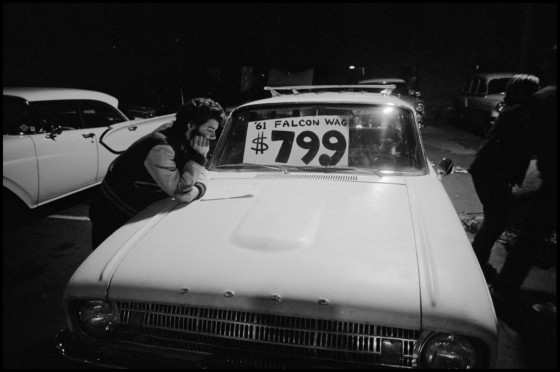
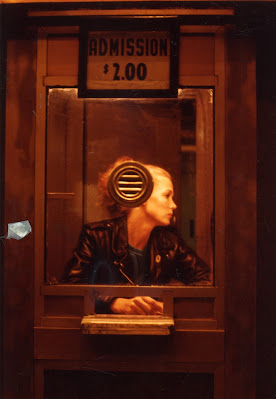
Variety co-stars the photographer, activist, and the 2023 most influential art figure of the year recipient, Nan Goldin, as Christine’s friend Nan. The Tin Pan Alley bar where Nan works on screen was the Bowery bar where Goldin worked at the time, and which featured alongside the bar’s regulars – friends and sex workers – in her renowned photographic Slide Show The Ballad of Sexual Dependency. Goldin also documented the film via various gorgeous on-set images.
Gordon has described Variety as a “part-document, part-narrative, part-desire-filled-landscape of New York at that moment in time”. A Hitchcock fan, Gordon presents Variety as an inverted noir, drawing inspiration from Vertigo (1958) and the idea of what would have transpired if Kim Novak had stalked James Stewart: woman as ‘Investigator’, man as ‘Enigma’. As Gordon reflects, ‘With Variety, I said, let me see if I can have the female as subject. [Christine] transgresses the limits of the situation. She’s the voyeur.’
Variety is a presentation of politics, cinephilia, art, and feminism. The film claims the gaze while disrupting the boundaries of male and female spaces. Early in the movie, while on break, Christine sneaks into the cinema at Variety, as equally fascinated by the men in the theatre as she is by the women – and images – on the cinema’s screen. As Christine’s obsession increases so does her confidence, and she starts boldly entering traditionally thought-of ‘male-dominated spaces’ or once ‘off-limits’ to women: a baseball game, a sex shop, a nocturnal market, all places where ‘man’s business’ is done.
As an independent art film, and to contrast so much Hollywood mainstream fare or even the porn watched by Christine in the film, Gordon refuses to offer narrative catharsis and tie the ending in a neat bow. While contentious to some audience members who seek closure before the end credits roll, Gordon admits, ‘the ending didn’t offer what the audience wanted,’ and is keen to stress curiosity and the grey area — or “empty space” — of desire. Susanna Moore’s book In the Cut also does this very well. Moore’s 1995 book, adapted for the screen by Jane Campion in 2003 (Campion also directed the film), has a divisive ending that differed drastically from the book. Still, fundamentally, it is another crucial New York film about, among various things, women’s desire, sexual power, and risk.
Yet this “empty space,” this ambiguity, is part of Variety’s enduring appeal, prompting discussions, interpretations, and evolving opinions that only occur over time and with the audience’s shifting perceptions. Gordon told Sight & Sound that recent audiences, whether watching the film for the first time or due to their evolving politics over the years, appear increasingly receptive to the film’s provocations. As Gordon said, ‘For me, I want to enter the forbidden zone. Variety forces the spectator, the viewer, to recognise [their] own complicity, [their] own voyeurism… I don’t want to suppress the imagination. And maybe Variety is open to the imagination.’
*Film introduction for at Midlands Arts Centre, Birmingham, January 6 2024.
It’s time to play the music. It’s time to light the lights. It’s time to head to Hollywood for TCM Film Fest! Yes, it really is that time of year again; when we gather with friends in Hollywood to watch a bunch of excellent films and hang out with the people we talk to every day of the year in the group chat. I cannot wait to see my pals; it’s what I live for. Yet it would not be travel without ordeal, and due to some recent stress/panic at home (and a planned security strike at Heathrow — a different hub to my airline but will be concluding the weekend I am due to travel, so it may still affect), the excitement has not fully kicked in for me quite yet. Fingers crossed, all will be good, and as always, the adrenaline rush will kick in once I’m through airport security and seated on the plane.
I have other fun things planned aside from movies while I am in LA, of which details are here, and I will also be blogging here and in greater depth in my newsletter (please subscribe and follow!). I said and failed to do this last year, my bad. In my defence, I was having too much fun. But first — TCM Fest! Will I stick to these films? Who knows! Do I believe in a festival schedule? Hardly. But anyway, here are my tentative TCMFF picks.
Thursday 13 April
The opening night starts gearing up in the afternoon when the red-carpet preparations commence and the first film of the fest approaches. So far, I have no plans for the day, but I guess the afternoon will be spent hanging out at the Roosevelt watching the red carpet set up, possibly followed by lurking on Hollywood Boulevard and watching some of the red carpet in action. So, the usual.
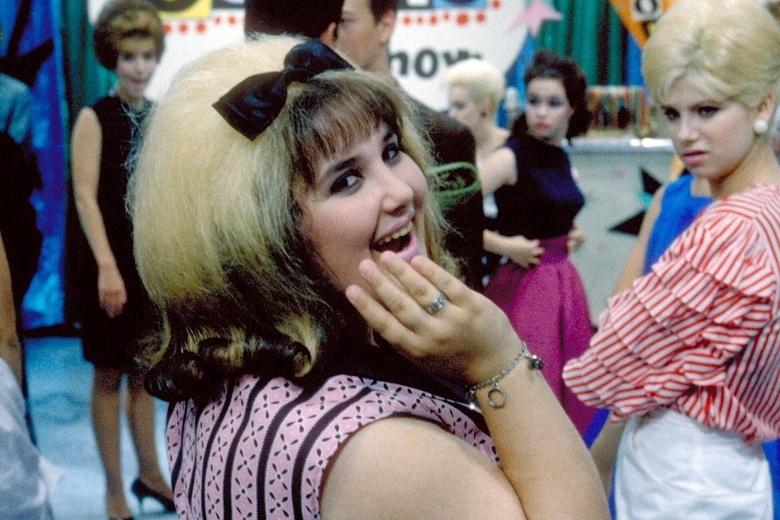
After an early dinner, I will either walk up to the beautiful Hollywood Legion Theatre to kick off the festival with Airport or stay at the Roosevelt for the poolside screening of Hairspray. I think both films are perfect for festivities to begin — raucous, hilarious, and will play great with a crowd. After skipping last year’s notorious Blue Hawaii screening (lol), I feel a poolside screening would be perfect, so it’s dependent on the day’s mood. I’ll then end the day with new-to-me Genevieve which I think most friends will be at too!
Friday 14 April
This is where it gets pretty frenetic, which I love. If I’m not too tired in the morning, I’ll head to The Old Maid, but I’ll likely skip the first block of films and start my day with Footlight Parade at noon.
It all gets very tricky in the afternoon, and is dependent on whether I choose to base my day around watching American Graffiti with Candy Clark in attendance at the TCL IMAX. American Graffiti is one of my very favourite films — I have watched it countless times. So I can clock up another viewing and head to Ball of Fire afterwards, OR I can change it up by watching new-to-me The Strawberry Blonde in the early afternoon block followed by the poolside screening of very fun-looking new-to-me Beach Party.
Obviously I will need some coffee and food at some point, and the latter option will grant me time for dinner and breaks before heading to the midnight screening of The Batwoman, which I will not be missing on any account! I love the midnights, and I’ll base my day on whatever grants me enough energy to power through and stay awake until 2am.
Saturday 15 April
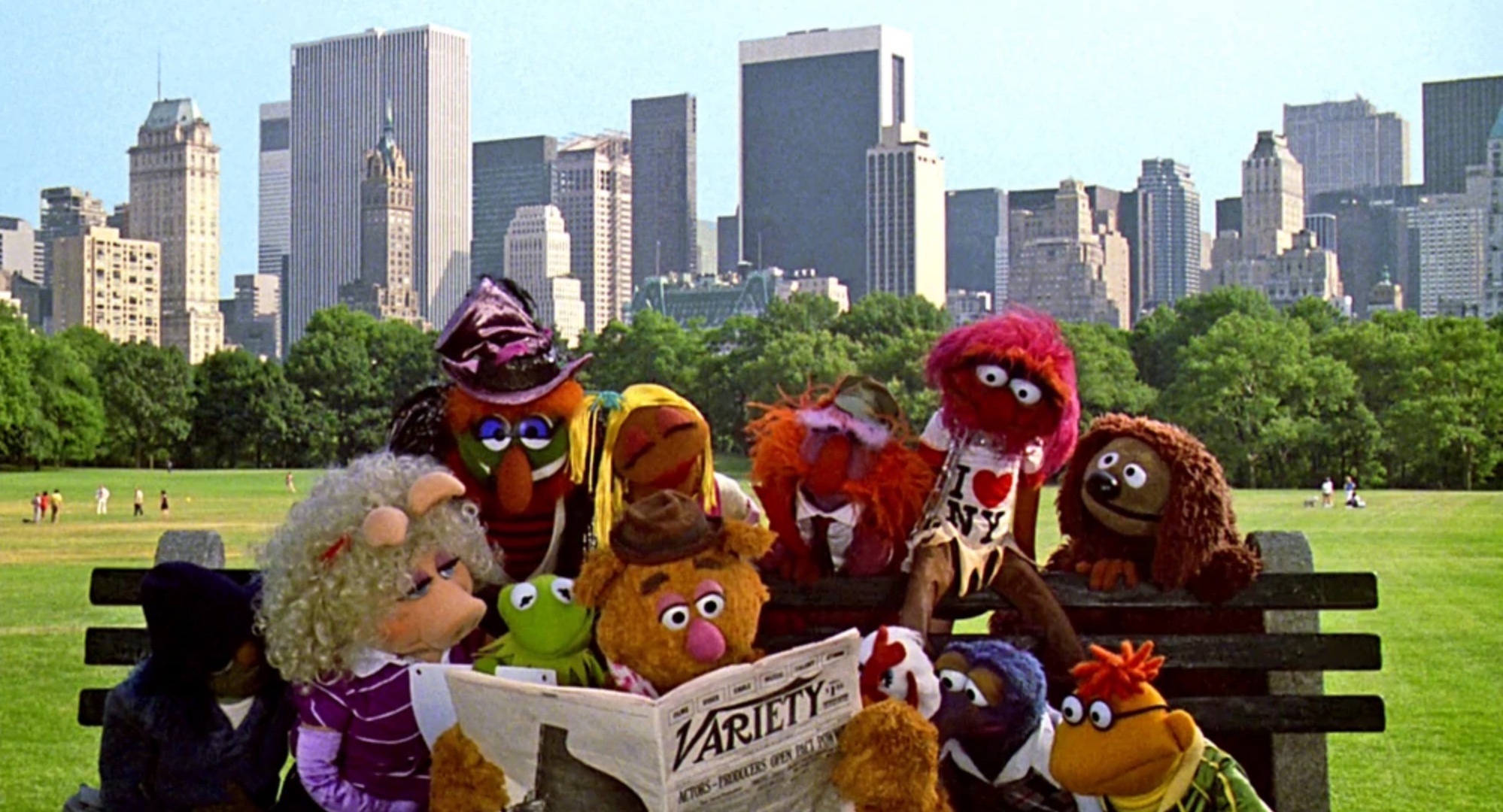
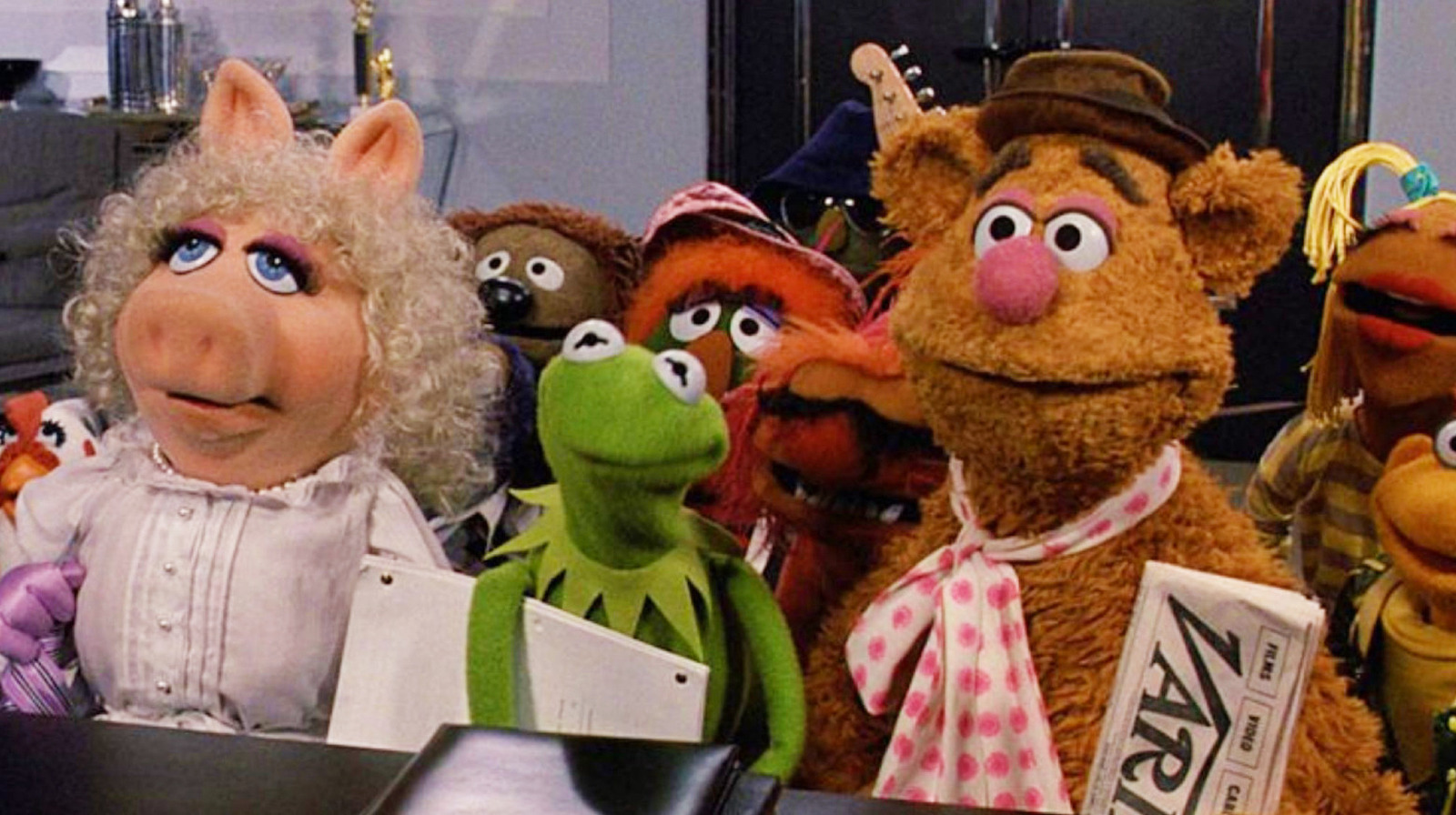
There have been times when if I had attended a midnight screening I would sleep in and miss the 9am films, but no way am I missing The Muppets Take Manhattan (my second favourite Muppet film or my favourite non-Christmas Muppet film, depending on the way you look at it) with Brian Henson in attendance.
In the lunchtime slot, I will be watching Tuesday Weld in the movie adaptation of Joan Didion’s Play It As It Lays. I love the book, so this is a definite one for me, and I plan to follow with Russ Tamblyn in conversation at Club TCM. These talks are always interesting and often hilarious, and where else will I get the opportunity for such a discussion?
As for the early to the late evening, I’ll either hang around Club TCM and stay for the Assisting the Classics discussion, or I’ll be at The Crimson Canary, which I had never even heard of before! Another option is to go with the flow (as per usual) and see what friends are doing in the lead-up to Xandadu at midnight. I have never seen Xandau in a theatrical environment, and this will be an excellent screening as we are all hopelessly devoted to Olivia Newton-John (RIP).
Sunday 16 April
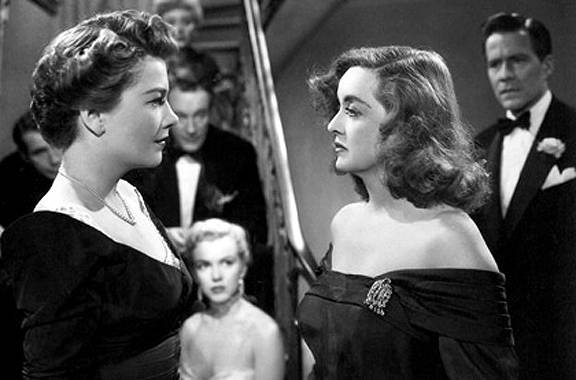
As soon as you get in the flow, it’s over. As usual, a chunk of the schedule is TBA, and at this point, I’m only set on new-to-me No Man of Her Own in the early afternoon block. All About Eve would be a fabulous way to spend the afternoon, and I have never seen A Shot in the Dark (which is playing in the evening), but, again, it depends on the TBAs.
One thing is for sure: I’ll be seeing you at the Closing Night Party at The Hollywood Roosevelt, but we know the real fun comes after. See you at In-N-Out Burger!
The return of TCM Film Festival following a pandemic-induced two year absence was always going to be an experience, but even I — who always has a ton of fun during the festival — did not expect to have the obscenely good time I had. Although I had barely socialised and not travelled since October 2019, my decision to break the ice by flying halfway across the world was an extremely chilled experience. To be honest, any residue anxiety dissipated the moment I sat on the plane. It was definitely foreshadowing; I laughed and stayed up until 2am most nights and watched a bunch of films with my friends and it was therapy. There are so many anecdotes and in-jokes I that have nothing to do with the festival (most will not be revealed on this blog, lol, others will be shared elsewhere), but here are some bits and pieces and photos and things from festival week:
Films I watched:
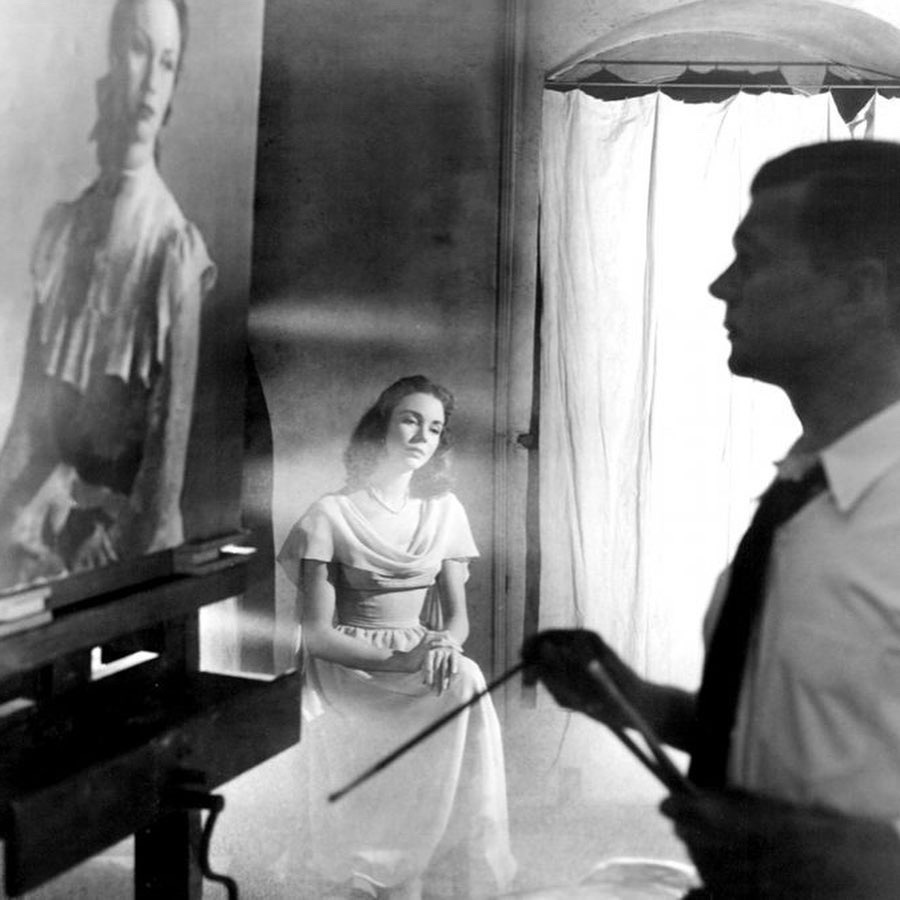
Dinner at Eight (1933) All of Me (1984) Miracle Mile (1988) — I keep falling asleep and jolting awake during the midnight screening which added to the experienced of an already excellent film! Three on a Match (1932) The French Way (1945) Portrait of Jennie (1948)— this left me rapt and I’ll be writing about for my next newsletter (currently in the works!) Polyester (1981) — a midnight screening in Odarama with Mink Stole in attendance! Peggy Sue Got Married (1986) 7th Heaven (1927)
Portrait of Jennie, Dir: WilliamDieterle, 1948.
Other highlights during festival week included:
Boardner’s! So many great nights (and an afternoon waiting for it to open) at our favourite bar/the best bar in Hollywood.
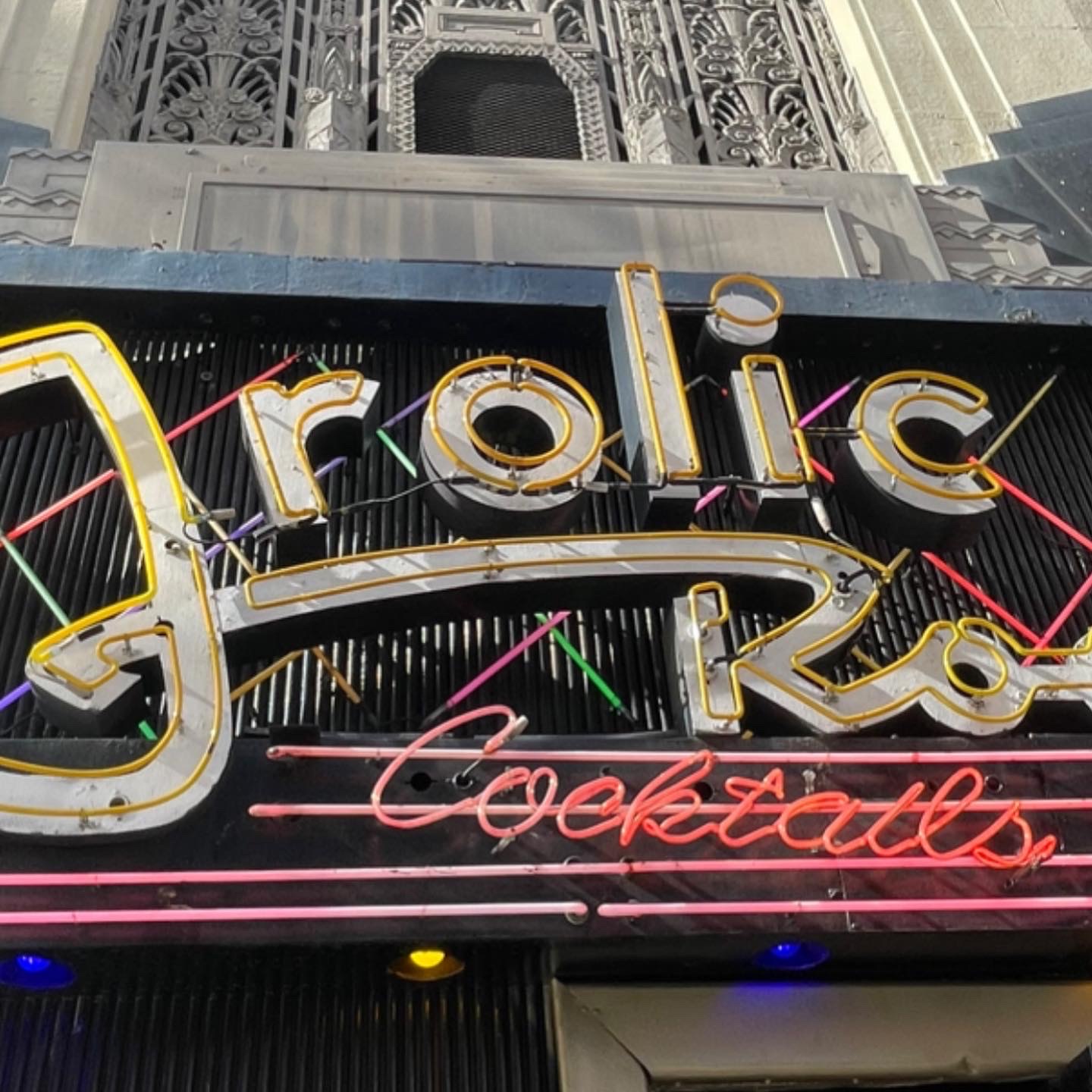
An afternoon trip to the Folic Room.
Sneaking selfies at The Hollywood Museum.
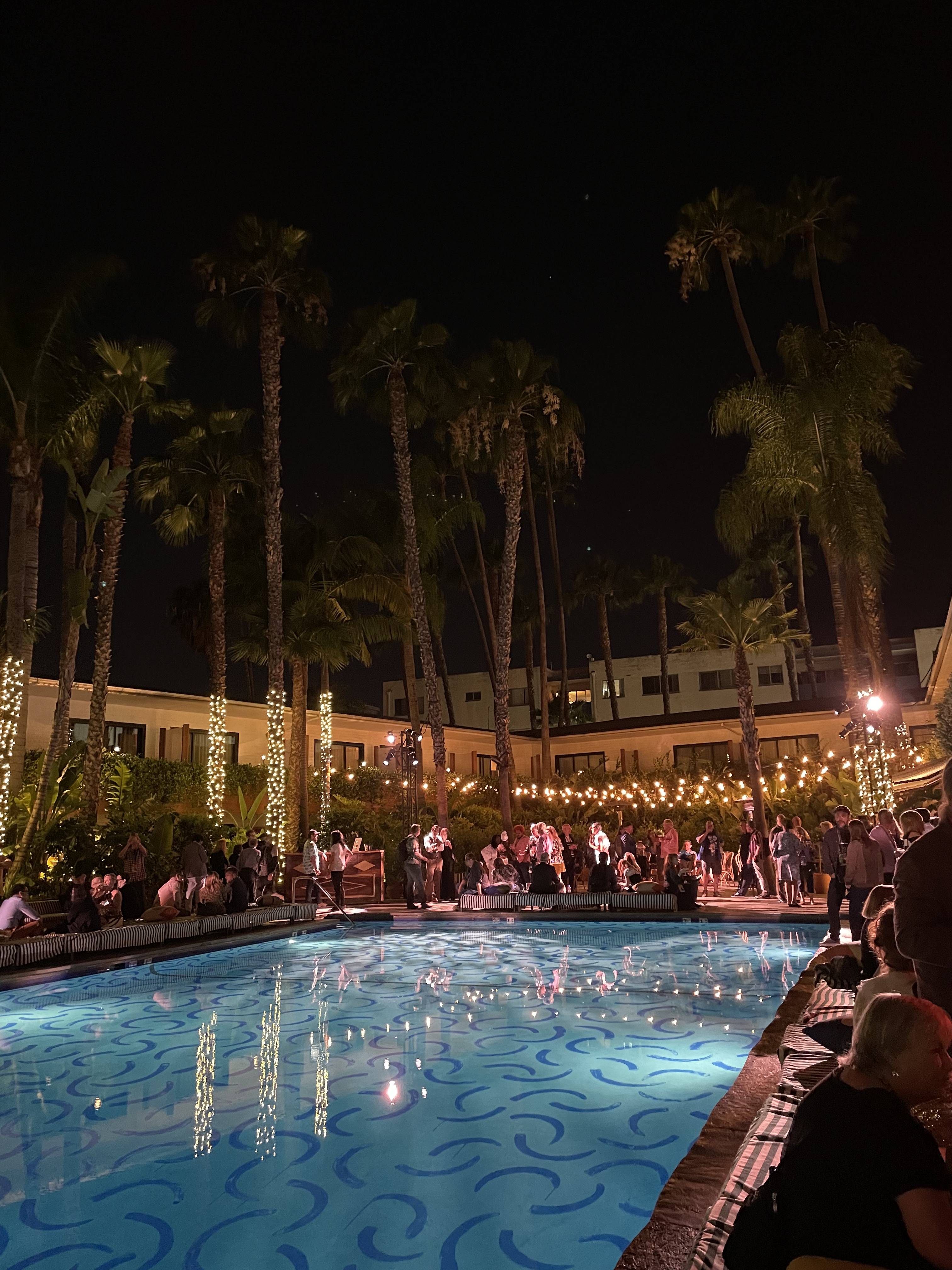
The TCFMFF closing night party was poolside at the Roosevelt this year (instead of cramming us all in the ballroom) which was nice. I kinda wanted someone to fall in to REALLY make it a party!
Midnight fries at In-N-Out Burger.
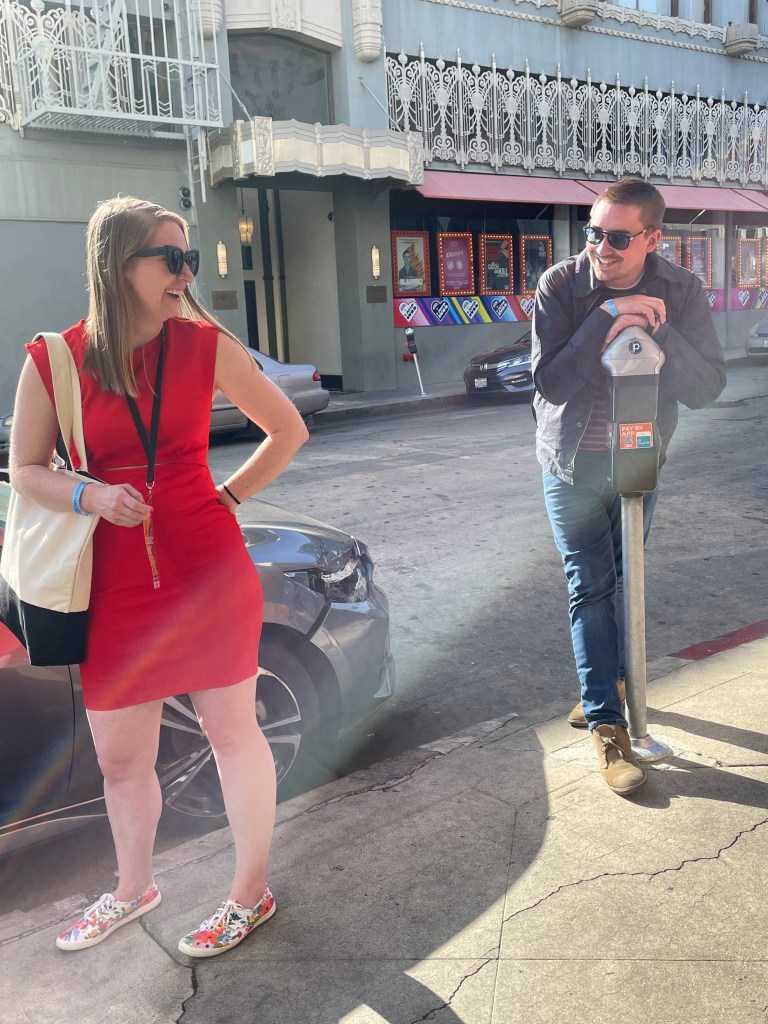
Waiting for Boardner’s to open with Jessica and Brandon.
This year’s festival was catharsis, and it was greatly needed. Love to all those I hung out with, ate dinner with, gossiped with, and with whom I had the best time. Yes, I did stay on in LA, and I’ll probably write something about moments from my extended time in the city, too. But as for TCMFF, until next time x
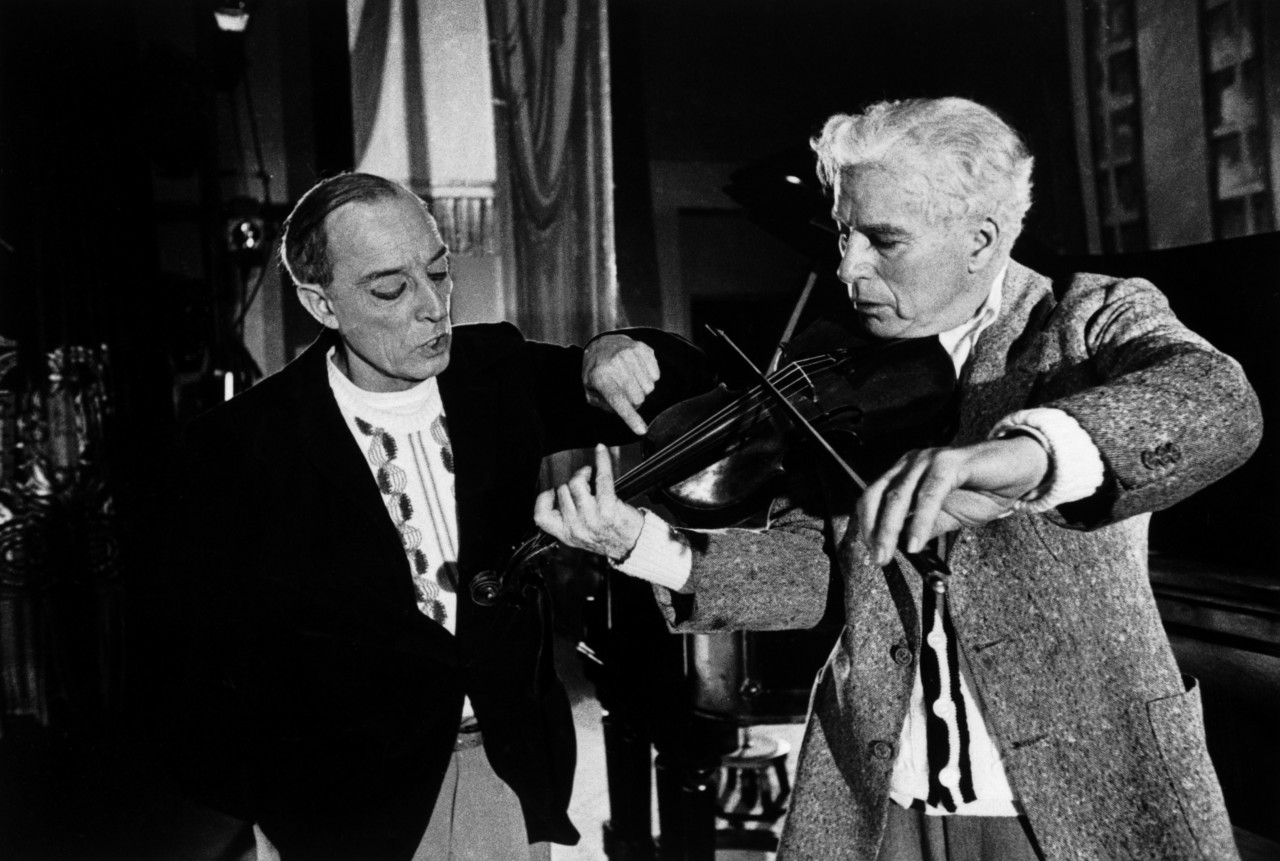
For Magnum Photos I wrote about W. Eugene’s Smith moving photographs of Charlie Chaplin as he made Limelight (1952), the most personal film of his career:







 Sabina Stent