Review: “Late Night with the Devil”

Late Night with the Devil, a found footage horror in which a live late-night talk show goes horribly awry, is 1992’s Ghostwatch for the Shudder generation.

As the host of Night Owls with Jack Delroy, Delroy (an excellent David Dastmalchian) is a modestly successful host who “five nights a week helps an anxious nation forget its troubles.” Although happily married and a member of a powerful all-male secret society called The Grove, Delroy still can’t compete with the popularity and accolades of Johnny Carson.

But with wife’s death comes dwindling fortunes and figures, and bids at television sensationalism prove unsuccessful. That is until the night of 31 October 1977, when a disastrous Halloween episode of Night Owls with its spiritually connected guests – including a psychic, a parapsychologist, and a possessed young woman — made Jack Delroy infamous.

With its meticulous 70s aesthetic, horror references, and satirical nature that refuses to verge into parody, the third film from Australian siblings Colin and Cameron Cairnes offers a contemporary twist on the live TV meets found footage formula. Darkly funny yet refusing to verge fully into parody and coming it at 86 minutes, Late Night does enough to keep audiences on their toes. As is said at one point “join us for a live television broadcast as we attempt to communicate with the devil. But first, a word from our sponsors…”

*This review first appeared on ichoosebirmingham.com on 21 March 2024. 

Pinocchio: Surrealism, Spinxes, and Wood Sprites

This image has an empty alt attribute; its file name is https%3A%2F%2Fbucketeer-e05bbc84-baa3-437e-9518-adb32be77984.s3.amazonaws.com%2Fpublic%2Fimages%2F081ea85b-c79d-4c05-b9ea-8a300c9ede16_780x438.jpeg
Pinocchio, Dir: Guillermo del Toro, 2022

It’s December, I’ve neglected this site, and my newsletter has taken on a Surreal and festive flair for the month. I’ll be back to blogging here in the new year, but to kick things off, I wanted to share something I wrote last Christmas on GDT’s Pinocchio (2022), which originally appeared on my Substack newsletter, Love Letters During a Nightmare, December 2022.


This week, I watched Guillermo del Toro’s beautiful stop-motion Pinocchio (2022). While Disney’s interpretation always terrified and upset me, GDT’s flair for dark fairy tales makes this a dark fable about social oppression and disobedience filled with heart, hope, and a ton of love.

[I wanted to throw up a spoiler warning just case you don’t want any small details ruined if you haven’t seen the film! Maybe you do not mind — we all know the story and images and reviews are online — but not everybody has seen this version with this ending. Hopefully, you have seen the movie and want to read on, or maybe you haven’t and want to read on anyway. Maybe reading this will make you want to watch the film? Whatever camp you fall into, I wanted to give you the option. Ok, let’s carry on!

While I don’t have time to get into the wonderful voice work, or Sebastian J. Cricket, or how much I love Spazzatura the Monkey, I wanted to use this space to discuss GDT’s exploration of death, how he depicts beauty in darkness, and, most significantly, two particular characters: the Wood Sprite and Death.

In Pinocchio, Geppetto fashions the wooden puppet out of the grief of losing his son Carlo in an accidental air strike by Austrian forces. After passing-out drunk, the wooden boy marionette is brought to life by the blue Wood Sprite. Later on, Pinocchio encounters the Wood Sprite’s sister, Death.

I love these characters for so many reasons. Death reminds me of a Leonor Fini artwork, notably one of her sphinxes, while the Wood Sprite (the Blue Fairy in Disney’s version) could be a Leonora Carrington or Remedios Varo deity, such as Varo’s Minotaur (1959). Known for her androgynous, alien figures with oval faces and almond-shaped eyes who more than resembled the artist herself, Varo’s appeasing yet magical protagonists always disarm any preconceived threat or strangeness because of who or what they resemble. In Minotaur, a cosmic blue (like the Blue Fairy) feminine horned creature is non-confrontational, welcoming her visitors or onlookers with a gentle, friendly greeting.

This image has an empty alt attribute; its file name is https%3A%2F%2Fbucketeer-e05bbc84-baa3-437e-9518-adb32be77984.s3.amazonaws.com%2Fpublic%2Fimages%2F7703bd0a-9293-4b1d-9579-af103801f525_349x700.jpeg
Remedios Varo, Minotaur (1959)

Varo’s Minotaur is both human and not human; thin-legged, delicate, and divine. The hood of a shimmering cloak surrounds her. Small white horns curve upward from each side of her head. Varo has painted a tiny galaxy instead of a crown of hair and holds a gold key in her elegant hands. I kept thinking of her when watching Pinocchio, but my mind kept going to another work by another artist: Toyen, and her forest messenger. 

This image has an empty alt attribute; its file name is https%3A%2F%2Fbucketeer-e05bbc84-baa3-437e-9518-adb32be77984.s3.amazonaws.com%2Fpublic%2Fimages%2F3da01739-7546-4d83-a442-f868da1edbb7_600x748.jpeg
Toyen, Poselstvi Lesa [The Message of the Forest] (1936)

A lesser-discussed artist, Toyen (born Marie Čermínová but used the name Toyen since early adulthood) was a founder and the most celebrated/best-known member of the Czech Surrealist Group. After a period in Paris, Toyen returned to Prague in 1928 and helped establish the city as a significant centre for Surrealist activity. Toyen was good friends with members of the French Surrealist group, including Max Ernst, Yves Tanguy and Salvador Dalí, and the French writer, poet, and author of the Surrealist Manifesto André Breton and his third wife, the French writer and artist Elisa Breton.

Toyen was known for dressing in working men’s clothes and exploring gender stereotypes in their life and work. Some speculate they chose their name in a play on the French word ‘Citoyen’ (citizen), which gave a non-gendered identity, as well as being a play on the Czech words ‘To je on’, meaning ‘it is he’. The Czech poet, writer, and fellow co-founder of the Czech Surrealist Group Vítězslav Nezval once said that Toyen “refused… to use the feminine endings” when speaking in the first person.

Poselstvi Lesa [The Message of the Forest] is one of Toyen’s most enduring paintings. Painted in 1936, The National Galleries of Scotland website describes the artwork as follows:

The power of nature over the human world is a recurring theme in Toyen’s work which repeatedly centres on barren, dream-like landscapes, featuring lone girls, fragmentary female figures and birds. The interest in these themes originates in illustrations made for children’s books, but this soon took on a more bizarre and sinister appearance. Toyen was careful not to ‘explain’ the work, but instead left the viewer to explore the symbolic meaning. In common with many Surrealists Toyen had a keen interest in the writings of Sigmund Freud, with works seeming to respond to dreams and nightmares; suggesting a world of intense anxiety.

This image has an empty alt attribute; its file name is https%3A%2F%2Fbucketeer-e05bbc84-baa3-437e-9518-adb32be77984.s3.amazonaws.com%2Fpublic%2Fimages%2F35783af9-f48b-4216-a19f-b7cf39fa8d6a_1200x675.webp
The Wood Sprite in Pinocchio, Dir: Guillermo del Toro, 2022

Also known as the Fairy with Blue Hair or ‘La Fata dai Capelli Turchini,’ The Blue Fairy or ‘La Fata Turchina,’ the Wood Sprite represents good and divine energy. She is Pinocchio’s guide, his guardian angel constantly attempting to divert him away from risky deeds, yet the rambunctious little boy frequently ignores her well-intended advice. Pinocchio’s rebellion is how he meets the Wood Sprite’s sister, Death. 

This image has an empty alt attribute; its file name is https%3A%2F%2Fbucketeer-e05bbc84-baa3-437e-9518-adb32be77984.s3.amazonaws.com%2Fpublic%2Fimages%2F8d048ccf-d3ff-431e-b1ff-afc740bd2e18_1173x635.webp
Death in Pinocchio, Dir Guillermo del Toro, 2022

After Count Volpe convinces Pinocchio to join his circus and Geppetto arrives to take him home, the men have an altercation — a literal tug-o-war for Pinocchio — causing the wooden boy to be thrown in the road and hit by a car. Having arrived in the afterlife, Pinocchio is greeted by the card-playing Black Rabbits and sent forward to Death, the sister of the Wood Sprite. Death tells Pinocchio he is immortal, and while he will return to the mortal realm, cautions that his time in the afterlife will increase each time he returns.

Death is the character who interested me the most. While referred to in the production notes as a Chimera, I cannot help but see Death as a Leonor Fini Sphinx with a Venetian Carnival mask (we will come to the masks in a bit). Death is a Fini painting rendered in claymation for a Netflix audience. The feline guardian of the underworld is the perfect embodiment of everything cat-like for which Fini is so well known.

“I wanted to be like the sphinx”, said Fini, the self-styled ‘Sphinx of Surrealism’. An artist who depicted assured, proud, powerful, and non-subservient women — as well as a legendary cat worshipper — Fini revelled in her sphinx-like association. Leaving a legacy that reversed the preconceived gender associations surrounding the sphinxes, tropes of the Goddess, and the patriarchy of Surrealism, Fini’s sphinxes, much like Death in Pinocchio, are often alone in their lairs or landscapes. Yet here, isolation and solitude aren’t a form of weakness. Instead, they signify both empowerment and nurturing.

This image has an empty alt attribute; its file name is https%3A%2F%2Fbucketeer-e05bbc84-baa3-437e-9518-adb32be77984.s3.amazonaws.com%2Fpublic%2Fimages%2Fdc8dcea5-470b-4ab2-be87-abec4794a2ed_1558x2000.jpeg
Leonor Fini, The Shepherdess of the Sphinxes (The Shepherdess of the Sphinxes (1941)

In her paper ‘La Feminité triomphante: Surrealism, Leonor Fini, and the Sphinx’, the author and scholar Alyce Mahon explores Fini’s association and self-imaging alongside the mythical creature. Mahon notes that ‘for the Surrealists, however, [mythology] offered a fantastic discourse with which to champion the irrational.’ She continues: 

The myth of the sphinx was especially attractive, providing the perfect metatext for an exploration of forbidden desire, as well as encompassing the fantasy of the femme fatale, the potential of the city for the marvellous encounter, and a means of self-questioning by which logic and riddle can be set against each other. In the realms of male Surrealists, continues Mahon, “as Breton turned to the Sphinx as a means of reinforcing his knight-muse fantasy, Max Ernst and Salvador Dalí turned to the sphinx as the seductive intermediary between gods and humans, fantasy and the real, with an emphatic Freudian emphasis on the tale. 

Breton incorporated the sphinx into his writings, most famously in Nadja, his seminal Surrealist novel, which included an encounter between himself and his eponymous doomed heroine in Paris’ Hotel Sphinx. Nadja is Breton’s sphinx: beautiful, forbidden and desired. Nadja is his flawed femme fatale, his fantasy and mystical apparition who he likens to a mythic creature. Yet when Nadja descents into madness, the illusion shatters, and the mystery and majesty vanish. She is no longer his exotic, marvellous creature. Madness in Surrealism is rife with double standards: men were celebrated, Romanised, heralded geniuses, and elevated. Women were destroyed, cast out, and victimised. Forgotten. 

Fini challenged these stereotypes.

This image has an empty alt attribute; its file name is https%3A%2F%2Fbucketeer-e05bbc84-baa3-437e-9518-adb32be77984.s3.amazonaws.com%2Fpublic%2Fimages%2Fe3242d55-71aa-4156-a352-157546d436cc_799x431.jpeg
Leonor FiniPetit Sphinx Gardien (1943-44)

Fini’s subversive sphinxes bewitch and entice in their autonomous, non-acquiescent, seductive and, often (but not always), predatory nature. She painted the sphinx in various ways, usually as a form of self-portraiture: the sphinx, much like the cat, was her animal and a form of power. By charging herself with this entity, she was aligning herself with all its mythical symbolism. Fini believed this imposing creature was both nurturer and destroyer, a maternal creator of life in possession yet able to wreak havoc and destroy life as much as create. Fini put the feminine back into a traditionally masculine myth and imbued it with many more totemic associations. 

Fini and her sphinxes, much like the various women Surrealists themselves, refuse to be categorised. Fini’s sphinxes are not necessarily violent, but they are women who no longer refuse to be quiet. They have the potential to invoke magic. Wild, unleashed, untamed, as the respected Surrealist scholar Whitney Chadwick noted: “Fini’s sphinx […] poses a question not about man, but about the woman artist’s place in the natural and metamorphic process that lies at the heart of the Surrealist vision of an art of fantasy, magic and transformation”. 

Fini painted Petit sphinx garden (1943-44) while she was staying on the isle of Giglio, and she continued the theme after returning to Rome. Symbols of necromancy and death surround the sphinx, including a triangle, broken eggs, and an alchemical text. She continues these themes in Little Hermit Sphinx (1948), a volatile and suggestive painting that continues to be one of Fini’s best-known creations. 

This image has an empty alt attribute; its file name is https%3A%2F%2Fbucketeer-e05bbc84-baa3-437e-9518-adb32be77984.s3.amazonaws.com%2Fpublic%2Fimages%2F63a95449-ba83-4cf5-9a12-2013ea2c0965_909x1536.jpeg
Leonor Fini, Little Hermit Sphinx (1948)

Chadwick has discussed Fini’s ability of fusion: masculine and feminine, human and bestial, wilderness and civilization, with work that was often darker, symbolically alluding to the forces underneath society and the murky goings-on that linger beneath any glossy surface. In Little Hermit Sphinx (1948), an open doorway reveals a ramshackle, unkempt building with peeling paintwork. An internal organ, which Fini confirmed was a human lung, dangles from the threshold, while leaves, a broken eggshell, and a bird’s skull are strewn on the floor. The sphinx’s black cloak reveals a cat-like paw.

Fini’s biographer Peter Webb said the painting was about Fini’s hysterectomy in late 1947. As Webb writes in his gorgeous biography of the artist, ‘Little Hermit Sphinx is a self-portrait that reflects Leonor’s state of mind after the trauma of her operation.’ The lung, meanwhile, was painted ‘because of the beautiful pink colour.’ It’s a painting of anxiety, trauma, and finding beauty in the darkness.


Although I can see Fini’s sphinxes in Death, I also see another facet of Fini’s life and work. Death’s face in Pinocchio is almost like a Venetian carnival mask — we can say its similar to the masks worn in the ritual scene of Stanley Kubrick’s final opus, Eyes Wide Shut (1999). There is a Fini connection to this, too.

Fini had a flair for the carnivalesque nature of dressing up and the ritual of masquerade. She once recounted, 

While still a child, I discovered the importance of masks and costumes. At fourteen, I walked through the streets of Trieste with a girl of my age, with foxtails stolen from our mothers sewn to our skirts. To dress up is to have the feeling of changing dimensions, species, space. You can feel like a giant, plunge into the overgrowth, become an animal, until you feel invulnerable and timeless, taking part in forgotten rituals. 

Masks appealed to both the childhood introvert and adult extrovert sides of Fini’s character, and she was famed for her love of masked balls. In a series of photographs by André Ostier, Fini wears several cat-like masks, and in 1949 she made a variety of masks for balls, attending them in the style of birds, cats or cat-birds. Two years later, in Paris, a book was published titled Masques de Leonor Fini (Masks of Leonor Fini), its pages etched with Sphinxes, skeletons, costumed figures, and masked faces. 

This image has an empty alt attribute; its file name is https%3A%2F%2Fbucketeer-e05bbc84-baa3-437e-9518-adb32be77984.s3.amazonaws.com%2Fpublic%2Fimages%2F166b0378-dfbb-4b0e-bc39-cad8f51f8919_842x840.jpeg
Leonor Fini as As ’Snowy Owl’ from ‘The Story of O,’ 1949. Photo by André Ostier

Masks allowed Fini to indulge in her love for all things carnivalesque, transformative, and magical while confronting her mortality. As she once said, ‘I have always loved – and lived – my own theatre. To dress up, to cross-dress is an act of creativity…The real excitement for me was the joy at preparing my costume. I used to arrive late, about, midnight, lightheaded with joy at being a royal owl, a large grey lion, the queen of the underworld…’

Towards the end of GDT’s Pinocchio, the boy dies in an explosion. In the afterlife, he asks Death for his life back to save a drowning Geppetto. Pinocchio knows this will make him mortal, but it’s a sacrifice he’s willing to make. After passing in the selfless act, Pinocchio is brought back to life by the Wood Sprite. Following his return to the living, we see Pinocchio at various stages over the years, enjoying a full, rich life and outliving Gepetto and his loved ones (including Spazzutura, whose last scene made me weep more than at any other point in the film), before embarking on his travels for new adventures. 

“The one thing that makes life precious, you see, is how brief it is,” says Death at one point in the film. It’s a beautiful, potent quote, rich with poignancy. Fini once said, ‘I wear masks in order to be someone else, and my masks, on my living, moving face, are Immobility. I like that…Death on my face…or perhaps an ideal life. A life without movement. Movement is a sequence of innumerable deaths.’

Chadwick said Fini’s sphinx was ‘both sorceress and the image of death.’ Light and dark, life and death. Two sides of the same coin, much like the Wood Sprite and Death. Both serve as reminders that while there is tumult and turmoil in life, there are small pockets of joy, love, hope, and glimpses of great beauty in the darkness.


You can subscribe to Love Letters During a Nightmare here: sabinastent.substack.com

TCMFF 2023: It’s Time to Light the Lights!

It’s time to play the music. It’s time to light the lights. It’s time to head to Hollywood for TCM Film Fest! Yes, it really is that time of year again; when we gather with friends in Hollywood to watch a bunch of excellent films and hang out with the people we talk to every day of the year in the group chat. I cannot wait to see my pals; it’s what I live for. Yet it would not be travel without ordeal, and due to some recent stress/panic at home (and a planned security strike at Heathrow — a different hub to my airline but will be concluding the weekend I am due to travel, so it may still affect), the excitement has not fully kicked in for me quite yet. Fingers crossed, all will be good, and as always, the adrenaline rush will kick in once I’m through airport security and seated on the plane.

I have other fun things planned aside from movies while I am in LA, of which details are here, and I will also be blogging here and in greater depth in my newsletter (please subscribe and follow!). I said and failed to do this last year, my bad. In my defence, I was having too much fun. But first — TCM Fest! Will I stick to these films? Who knows! Do I believe in a festival schedule? Hardly. But anyway, here are my tentative TCMFF picks.

Thursday 13 April

The opening night starts gearing up in the afternoon when the red-carpet preparations commence and the first film of the fest approaches. So far, I have no plans for the day, but I guess the afternoon will be spent hanging out at the Roosevelt watching the red carpet set up, possibly followed by lurking on Hollywood Boulevard and watching some of the red carpet in action. So, the usual.

After an early dinner, I will either walk up to the beautiful Hollywood Legion Theatre to kick off the festival with Airport or stay at the Roosevelt for the poolside screening of Hairspray. I think both films are perfect for festivities to begin — raucous, hilarious, and will play great with a crowd. After skipping last year’s notorious Blue Hawaii screening (lol), I feel a poolside screening would be perfect, so it’s dependent on the day’s mood. I’ll then end the day with new-to-me Genevieve which I think most friends will be at too!

Friday 14 April

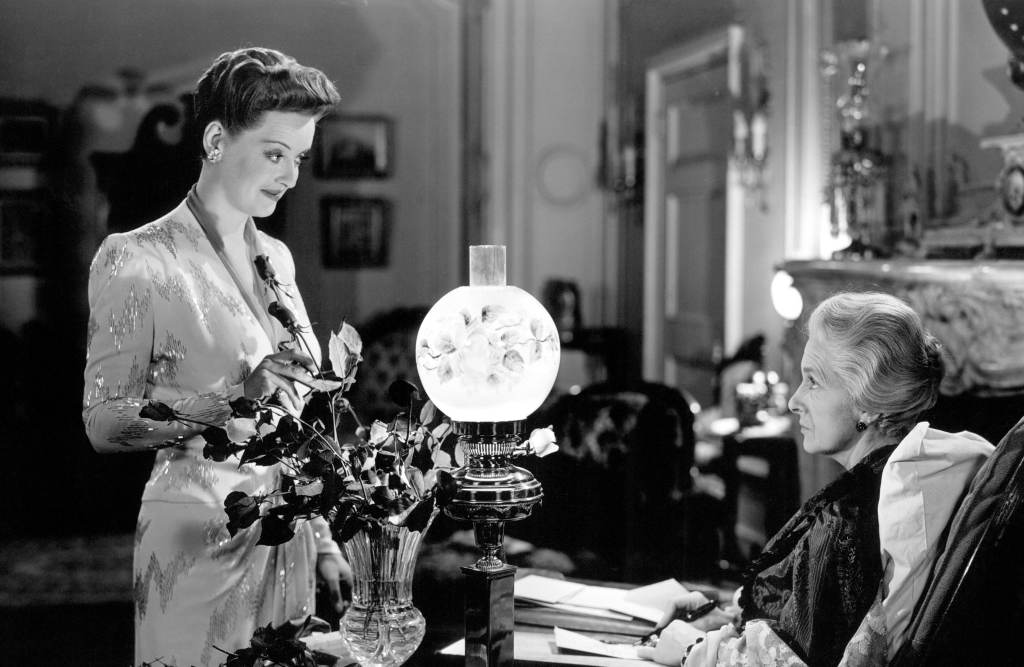
This is where it gets pretty frenetic, which I love. If I’m not too tired in the morning, I’ll head to The Old Maid, but I’ll likely skip the first block of films and start my day with Footlight Parade at noon. 

It all gets very tricky in the afternoon, and is dependent on whether I choose to base my day around watching American Graffiti with Candy Clark in attendance at the TCL IMAX. American Graffiti is one of my very favourite films — I have watched it countless times. So I can clock up another viewing and head to Ball of Fire afterwards, OR I can change it up by watching new-to-me The Strawberry Blonde in the early afternoon block followed by the poolside screening of very fun-looking new-to-me Beach Party

Obviously I will need some coffee and food at some point, and the latter option will grant me time for dinner and breaks before heading to the midnight screening of The Batwoman, which I will not be missing on any account! I love the midnights, and I’ll base my day on whatever grants me enough energy to power through and stay awake until 2am. 

Saturday 15 April

There have been times when if I had attended a midnight screening I would sleep in and miss the 9am films, but no way am I missing The Muppets Take Manhattan (my second favourite Muppet film or my favourite non-Christmas Muppet film, depending on the way you look at it) with Brian Henson in attendance.

In the lunchtime slot, I will be watching Tuesday Weld in the movie adaptation of Joan Didion’s Play It As It Lays. I love the book, so this is a definite one for me, and I plan to follow with Russ Tamblyn in conversation at Club TCM. These talks are always interesting and often hilarious, and where else will I get the opportunity for such a discussion?

As for the early to the late evening, I’ll either hang around Club TCM and stay for the Assisting the Classics discussion, or I’ll be at The Crimson Canary, which I had never even heard of before! Another option is to go with the flow (as per usual) and see what friends are doing in the lead-up to Xandadu at midnight. I have never seen Xandau in a theatrical environment, and this will be an excellent screening as we are all hopelessly devoted to Olivia Newton-John (RIP).

Sunday 16 April

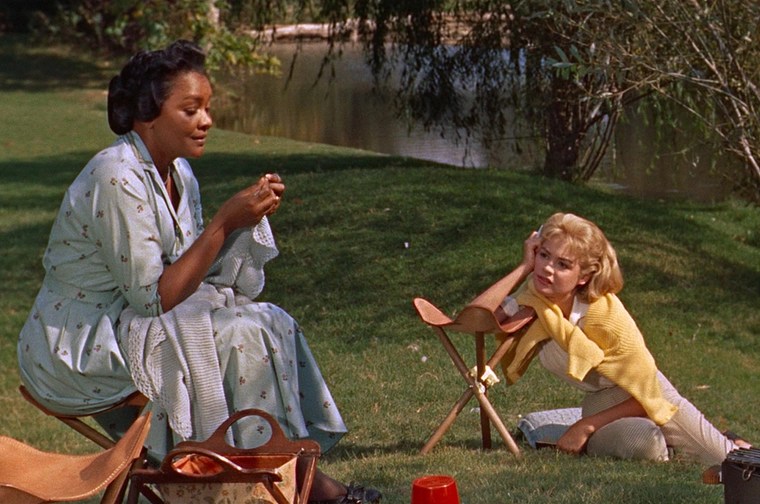
As soon as you get in the flow, it’s over. As usual, a chunk of the schedule is TBA, and at this point, I’m only set on new-to-me No Man of Her Own in the early afternoon block. All About Eve would be a fabulous way to spend the afternoon, and I have never seen A Shot in the Dark (which is playing in the evening), but, again, it depends on the TBAs.

One thing is for sure: I’ll be seeing you at the Closing Night Party at The Hollywood Roosevelt, but we know the real fun comes after. See you at In-N-Out Burger! 

Strangers on a Train

For my newsletter, I wrote about the Surrealist themes in Alfred Hitchcock’s Strangers on a Train (1951):

https://open.substack.com/pub/sabinastent/p/the-surrealism-of-strangers-on-a?r=ceu&utm_medium=ios&utm_campaign=post

Strangers on a Train (Dir: Alfred Hitchcock, 1951)