Film Intro: “Imitation of Life” (1959) [MAC Birmingham, 30/06/24]

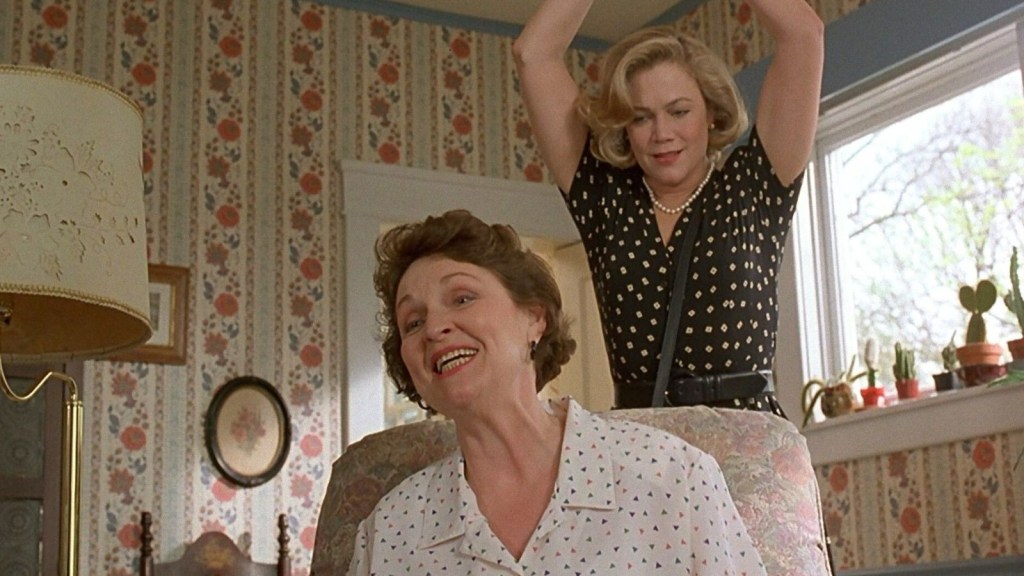
There is no melodrama like a Douglas Sirk melodrama, and Imitation of Life (1959) is no exception. It’s a powerful film, a key Sirk text, and a potent story about motherhood, race, class, and gender. To quote the BFI, “Douglas Sirk’s final Hollywood feature is a remake of John Stahl’s [1934] film of Fannie Hurst’s novel about two single mothers, one white, one black, striving together in a man’s world. It focuses, with typically sharp irony and intelligence, on issues of racial prejudice and inequality.”

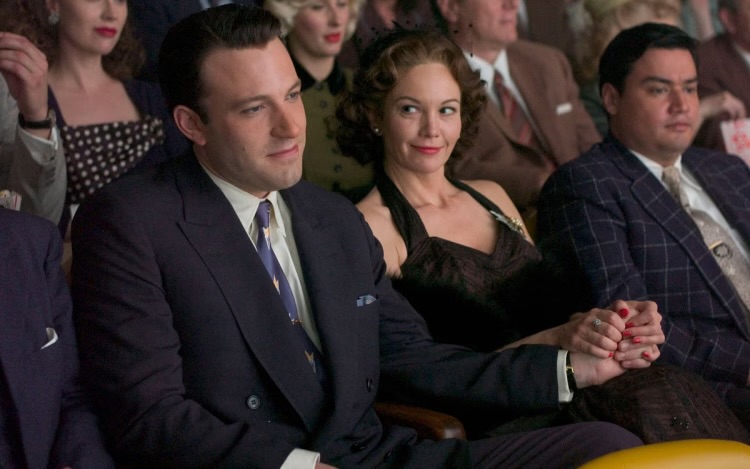
Imitation of Life film centres on two sets of mothers and daughters, the Merediths (who are white) and the Johnsons (who are Black). In the opening scene, the young girls meet on the beach, and instantly become best friends. Susie has gone wandering from her mother to play with Sarah Jane, and this is where Lora (Lana Turner) finds her daughter, in Annie’s (Juanita Moore’s) care. Lora assumes Sarah Jane is white and Annie’s is her black babysitter, and is suprised to learn Sarah Jane is Annie’s fair-skinned multiracial daughter. On learning Annie and Sarah Jane have nowhere to stay, Lora invites them home for the night, but the close friendships between both sets of mothers and daughters build and bind, and we see this unit — this family —over the next eleven years as the girls mature.

In the other mother, both girls find something they desire, and what their own maternal figure lacks: Susie longs for her mother’s love rather than her actress mother’s glamour and fame, while Sarah Jane deliberately performs whiteness to achieve a higher quality of life – not out of distain for her mother, but survival as a part-black woman in a white man’s world. As Claire White wrote in her piece ‘The kids are not alright: Imitation of Life, “in many coming-of-age stories, white girls such as Susie are afforded the luxury to have relatively trivial concerns, whereas girls of colour such as Sarah Jane have bigger, societal issues to deal with.” As White continues, “while Sarah Jane (played as a teenager by Susan Kohner) tries to live a life of her own, far, far away from her darker-skinned mother who is always at home, Susie (Sandra Dee) just wants to talk about boys, kissing and algebra with her mother, who has become a successful Broadway actress and thus is never around.”

Over the course of the film, Sarah Jane perpetuates the fallacy that she is white and is constantly annoyed when Annie continues to kindly point people to the truth. When Sarah Jane’s race is discovered by a boy, with upsetting consequences, both mothers and daughters have a different perception of what this means and where the blame lies.

Sirk was keen to provide the Annie–Sarah Jane relationship in his version with more screen time and intensity than the characters were given in the 1930s versions of the story, and the critical consensus was that Juanita Moore and Susan Kohner (who was born to Roman Catholic mother of Irish and Mexican descent and a Czech Jewish father) stole the film from Lana Turner (which, as you will see, they did). The on-screen mother and daughter were individually nominated in the Best Supporting Actress category at both the Academy Awards and Golden Globes of 1959 with Kohner winning The Globe for her performance. Sirk said that he had deliberately and subversively undercut Turner to draw focus toward the issues of the two black characters, and his treatment of racial and class issues is admired for its perceptiveness of the times.

While their problems are very different, both sets of mothers and daughters have a degree of disconnect, and this is indicative of the time as the generational divide of 1950s America increased the sense of alienation between youth and adults. This has been echoed by the sociologist Kenneth Keniston, who in 1965 wrote that “the rapid advancement in technology meant that the future for the youth of that era was more unknowable and uncertain than for any generation before it.” And we see this divide between Lora and Annie, and Susie and Sarah Jane, who lacking the guidance they seek at home in the care of their mothers, find “it is only through distance from the home that they can forge their own path.” There is a moment when Annie apologises for loving her daughter “too much,” but still — as painful as it is — understands that she can only live her life and forge her independent identity if she sets her free. There is an unspoken bond between them, although Sarah Jane isn’t aware of its significance before it’s too late.

While Sirk’s version of Imitation of Life was not especially well-reviewed upon its original release —  it was compared to a soap opera and deemed inferior to its 1934 predecessor — it became the sixth highest-grossing film of 1959, making $6.4 million. It’s now far more famous than Stahl’s version and is considered a masterpiece of Sirk’s American career. The critic Emanuel Levy wrote that “one of the four masterpieces directed in the 1950s, the visually lush, meticulously designed and powerfully acted Imitation of Life was the jewel in Sirk’s crown, ending his Hollywood’s career before he returned to his native Germany.”

Imitation of Life is a film that endures, and continues to inspire various contemporary works of media. Todd Haynes’s 2002 film Far from Heaven is a homage to Sirk’s films, notably All That Heaven Allows (1955) and Imitation of Life, while R.E.M.’s 2001 song “Imitation of Life” took its title from the film (despite none of the band members having seen it). Additionally, the 1969 Diana Ross & the Supremes song “I’m Livin’ in Shame” is based on the film, and in 2015, BBC Online ranked the film as the 37th greatest American movie ever made, based on a survey of film critics.

Film Intro: “Now, Voyager” (1942) [MAC Birmingham, 23/06/24]

In an essay for Criterion titled ‘Mother Monster,’ the academic and writer Ella Taylor states, “Now, Voyager’s real badass mom, and not in a good way, is a snobby Boston Brahmin played with quietly rabid conviction by British actress Gladys Cooper. Mrs. Henry Vale is a prime example of how melodrama of the period rendered the horrid mothers in classic fairy tales—the witch, the wicked stepmother, the predatory crone.”  And in Now, Voyager, we have arguably the doyen of bad mothers.

Now, Voyager was one of the biggest hits of the maternal melodramas Hollywood made during World War II, as studios sought to spotlight mothers as cinematic role models for women at a time when some were war widows raising children alone, some were embarking on extramarital trysts in the absence of their own partners, while others were basking in their newfound independence as they stepped into workplace jobs previously done by men. Directed by Irving Rapper and based on a 1941 novel by Olive Higgins Prouty, Now, Voyager stars Bette Davis as Charlotte Vale, a middle-aged “frump” whose is under the thumb and command of her overbearing mother. Mrs Vale describes Charlotte, who she had given birth to during her forties, as “a child of my old age.” At one point she says, “of course it’s true that all late children are marked. Often such children aren’t wanted. That can mark them. I’ve kept her close by me always. When she was young, foolish, I made decisions for her. Always the right decisions.”

Charlotte’s sister-in-law, who fears Mrs Vale is driving Charlotte towards a mental breakdown, introduces Charlotte to the protective, kind, and liberal psychiatrist Dr. Jaquith (Claude Rains), who observes Mrs Vale’s control over her daughter’s life and recommends Charlotte spends some time away in his sanatorium. “My dear Mrs Vale,” Jaquith says as he smoothly confronts her, “if you had deliberately and maliciously planned to destroy your daughter’s life, you couldn’t have done it more completely.”

After discharge and reluctant to return home, Charlotte embarks on a literal journey of discovery in the form of a life-changing cruise, where – away from her mother – she blossoms into the picture of chic independent woman. Those of you who have seen the film before will be aware of the famous tracking shot of Davis on her return. She is a woman transformed by liberation, and the reveal of Charlotte’s new appearance – where she emerges looking very much like Bette Davis the movie star, and with a newfound sense of personal assuredness. When asked by Mrs Vale what she plans to do with her life on her return home, Charlotte irks her traditional mother by saying she will “get a cat and a parrot and live alone in single blessedness.” But Charlotte’s independence also brings the most human of hardships, a complicated love affair in the form of desire for an unhappily married father Jerry (Paul Henried), and — through a twist of fate, a chance meeting an encounter Jerry’s young daughter, Tina, with who Charlotte forms a significant bond, taking on the role of a compassionate and sympathetic surrogate mother to the troubled girl with mother issues of her own.

Of course, Mrs Henry Vale would not be such a menacing and formidable screen presence without the talent, diction, and sternness Academy Award Winner Gladys Cooper brings to the role. British born Dame Gladys Constance Cooper, DBE, had an illustrious career spanning seven decades, starting out as a teenager in Edwardian musical comedy and pantomime, before moving to dramatic roles and silent films before the First World War. Between 1917 and 1934, Cooper managed the Playhouse Theatre – where she also starred in various roles – and from the early 1920s won praise playing the lead in productions by W. Somerset Maugham and Noel Coward (amongst others) on the London stage. Cooper turned to cinema full-time in 1940, where she found Hollywood success cast in roles as aristocratic and disapproving society woman (although, granted, did was offered opportunities to play more personable, approachable women, as she did opposite Laurence Olivier’s Maxim de Winter in Rebecca (1940). Coopers various cinematic mothers, which pinnacled in Now, Voyager, also include a socialite mother in Kitty Foyle (1940), Laurence Olivier’s spurned wife in That Hamilton Woman (1941), Deborah Kerr’s tormentor mater in Delbert Mann’s Separate Tables (1958).

Yet, for all its success, Now, Voyager is both ambivalent towards motherhood, and in general mothers did not fare well at the pictures during this time, as cinemagoers preferred other variations of womanhood on screen. Ironically Davis would herself portray an overbearing mother in The Little Foxes and a mother surrogate of sorts All About Eve, as the star who takes the fame hungry newcomer under her wing only to be dethroned. Taylor notes that you can tell Davis was all-too aware and not entirely convinced by the characterisation of Charlotte, Davis as “rather too cool and aloof a cat to entirely persuade as a woman who ends up wanting self-sacrificing motherhood even more than she desires a passionate liaison.”

In Now, Voyager, we take pleasure in seeing Charlotte gain autonomy over the film. Still, in our gratification, we may also wonder about the events that lead to Mrs Vale’s nastiness and ponder what, or who exactly, in Taylor’s words, “mistreated the monster.”

Magnum On Set: “American Graffiti”

It’s George Lucas’ Birthday. In 2020 I wrote about my favourite Lucas film, American Graffiti, and Dennis Stock’s on-set photographs of the production for Magnum Photos: https://www.magnumphotos.com/arts-culture/cinema/magnum-on-set-american-graffiti/

Work Work: “Viva la Muerte!”

Radiance Films unveiled its new slate today, and I’m thrilled to have written the essay for Fernando Arrabal’s Viva la Muerte! Keep an eye on their social media and website for release dates, other titles, and order the disc of Viva la Muerte! here: https://www.radiancefilms.co.uk/products/viva-la-muerte-le

Essay: Buñuel and the Surrealists

Fortunately, somewhere between chance and mystery lies imagination, the only thing that protects our freedom, despite the fact that people keep trying to reduce it or kill it off altogether – Luis Buñuel.

Whatever art form it takes, whether painting, fashion, sculpture, or film, Surrealism has always been about disruption and the disorder of convention.

When the writer, poet, and co-founder of Surrealism André Breton was young, he and his friend, the French poet Jacques Vaché, would walk in and out of films at the cinema. At the end of the day, both young men would mentally edit all the images they had seen both on screen and off, mentally piecing the pictures together to create a personally unique movie of their very own. The result was “the visual collage thus put together in their heads as if it were a single film.”

We may say a similar approach was taken with Un Chien Andalou, Spanish filmmaker Luis Buñuel’s 1929 collaboration with Salvador Dalí. Both men pooled together two dreams, one each had experienced: Buñuel divulged his dream in which he saw a cloud sliced the moon in half, “like a razor blade slicing through an eye,” while Dalí replied with his dream about a hand festooned with crawling ants. These have become the best known images of Un Chien Andalou, a free association short film written by Buñuel and Dalí that continues to endure because of its Surrealist associations, Freudian symbolism, and dream imagery. The opening scene sets the tone, signposting the viewer to let the unconscious navigate. As Antonin Artaud once said, “the eye is the locus of transmission of meaning from writer to audience.”

Buñuel and Dalí intended their audiences to view the film in the same way as their artwork: reactionary, whether visceral or emotional. More importantly, they wanted audiences to suspend belief, let the unconscious take charge. The sliced eye was a metaphor that “links inner and outer, subjective, and objective,” what author Fiona Bradley describes as a ‘glace sans tain’, or a mirror without silvering’. Suspend belief, go internally and let the subconscious take over. The sluiced eye would inspire the severed ear lying in the grass behind the white picket fence in the opening segment of David Lynch’s neo-noir psychosexual fantasia Blue Velvet (1986). Both films signal the entry point into the world about to be inhabited, much like Alice falling down the rabbit hole and entering Wonderland. 

Un Chien Andalou relied on the subversion of the real world rather than flight from it. Where other films of the time were more abstract, interested primarily in photographic effects and the manipulation of light and shadow, Buñuel and Dalí’s dissolved one easily recognizable image into another at high speed. At one point, the camera focuses on a hand swarming with ants. In quick succession, the image then dissolves into one of the armpit hair of a girl lying on a beach, the spines of a sea-urchin, and the head of another girl. In another sequence, the man caresses a girl’s breasts, which turn into her thighs while he is touching them. As once Buñuel once said:

The plot is the result of a conscious psychic automatism, and, to that extent, does not attempt to recount a dream, although it profits by a mechanism, analogous to that of dreams. The sources from which the film draws inspiration are those of poetry, freed from the ballast of reason and tradition. Its aim is to provoke in the spectator instinctive reactions of attraction and repulsion.

Buñuel’s intentions for Un Chien Andalou, like many of his films, was to disrupt the social order, especially to offend the intellectual bourgeois of his youth. He took this mentality into the premiere of the film, attended by elite members of Parisian society known as ‘le tout-Paris,’ in which he alleged he placed rocks in his pockets. If the event was a disaster, he would throw them. Fortunately for all, it was a success.

Buñuel continued this mission of offence and mischief in 1972’s The Discreet Charm of the Bourgeoisie. Co-written with the French novelist Jean-Claude Carrière, the film weaves several linked vignettes in which a party of middle class attendees attempt, unsuccessfully, to dine together, and the interruptions that ensue. While Un Chien Andalou was intended to shock the bourgeois, The Discreet Charm of the Bourgeoisie unpacks this section of society to reveal their entitlement, but also their fears. The film is a Surrealist comedy, and as the audience we are both in on the joke, and soon revealed to be part of the punchline, too.

Dinner parties are, society would have us believe, ordered affairs, but the Surrealists understood the absurdity of formal and stuffy dining. As children, we are conditioned ‘not to play with our food,’ yet food and Surrealism have a long history of play. In Daisies (1966), Czech filmmaker Věra Chytilová’s Surrealistic comedy about two young women revelling in strange pranks, a hilarious food fight ensues. One artist deeply involved in the social disruption of food was the Swiss sculptor Meret Oppenheim. In her defining book about women artists and Surrealism, Women Artists and the Surrealist Movement, Whitney Chadwick writes that Oppenheim’s “youth and beauty, her free spirit and uninhibited behaviour, her precarious walks on the ledges of high buildings, and the “surrealist” food she concocted from marzipan in her studio, all contributed to the creation of an image of the Surrealist woman as beautiful, independent, and creative.” At the 1959 International Surrealist Exposition, Oppenheim presented Le Festin or ‘Cannibal Feast,’ a live art installation where a nude female model was used as a table to present a meal to attendees and partygoers. The photographer William Klein captured the image, which is more glamorous than gluttonous, and more gorgeous than grotesque.

Oppenheim was a sculptor with a knack for inverting the domestic. She covered a cup and saucer in fur and placed a trussed-up pair of virginal white shoes on a platter in the manner of a spatchcock chicken. Buñuel had previously played with dining in The Exterminating Angel (1962), a feature in which guests who have attended a lavish dinner party find themselves unable to leave following the room after their meal, resulting in all manner of chaos. Chaos is an element of L’Age d’Or, where Buñuel pushes the sexual proclivities of society, religion, and hypocrisy surrounding sex in high society. Once again co-written with Dalí, and cited as one of the first French sound films, in the film’s programme notes Dalí wrote that the idea ‘was to present the pure straight line of the conduct of one who pursued love in spite of the ignoble and patriotic ideals and other miserable mechanisms of reality.’

L’Age d’Or could be perceived as a Surrealist tale of desire between Gaston Modot’s unnamed man and his lady love Lya Lys, of the Amour Fou or ‘Mad Love’ that Breton talked about in his 1928 novel Nadja. The lovers are surrounded by the restrictions and constantly sneaking away to free themselves of these trappings and constraints, but everywhere they go, they are reprimanded for disturbing the proceedings.

The film begins like a nature documentary about scorpions, a veiled metaphor for aggression and torture while involving the Surrealist’s fascination with entomology, before continuing as a series of vignettes in which the couple’s romance is continually interrupted by everyone and anyone in their path, notably their family, society, and the church. In an early scene, a begraddgled man (one of a group of bandits led by the Surrealist artist Max Ernst) encounters a group of chanting Bishops (called the Majorcans or Mallorcans) sitting on a pile of rocks.

We later see the Bishops reduced to their skeletal remains, and witness a scuffle during the blessing of a Holy relic (what appears to be a concrete square). The spectacle, like most of L’Age d’Or, is as disruptive and darkly comic as it is blasphemous. 

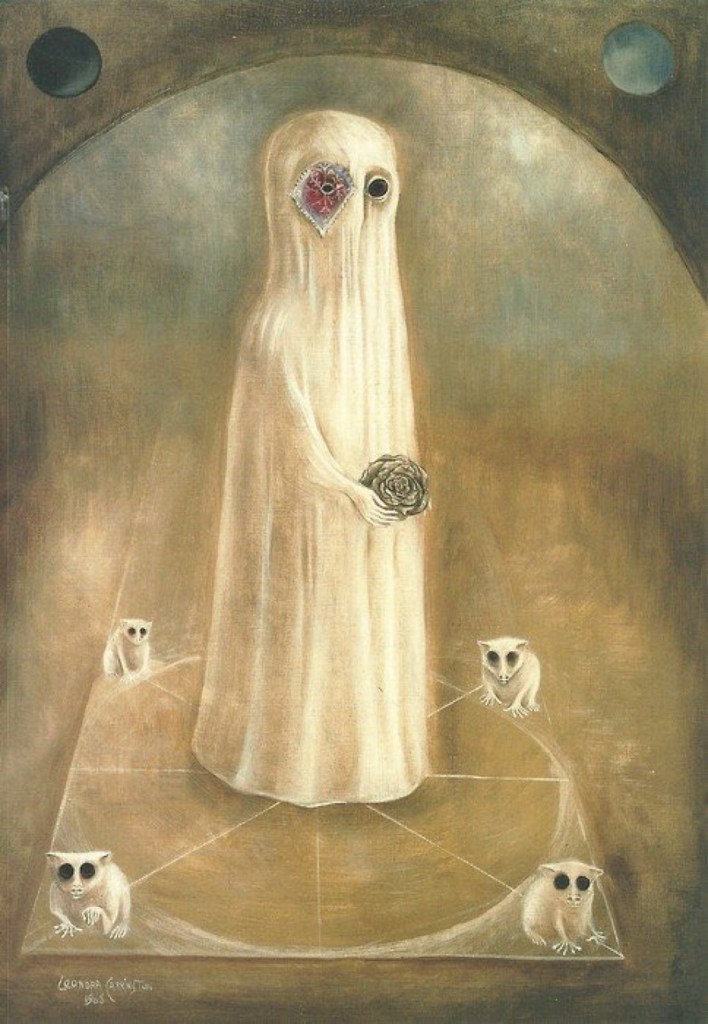
The farcical nature of this scene feeds into both Buñuel and Surrealist artists’ perceptions of religion. There is a lovely anecdote about the artist Leonor Fini arriving at one of the Paris cafés where the Surrealist group held regular meetings wearing pink silk cardinal’s stockings (items she had purchased from a religious vestment shop in Rome’s Piazza al Minerva). Breton was obviously thrilled at Fini’s anti-clericalism and display of cross-dressing. Yet this reaction was not her intention. Fini — a painter, set designer, illustrator, author, and costume designer who never wanted to be labelled a Surrealist despite her continued association — never wore the outfit with Breton in mind; her reason for wearing the stockings was much simpler: she liked the colour. She loved the erotic frisson experienced while wearing these stockings. She often wore scarlet cardinal robes for the same reason, and, as we know, she had been experimenting with clothing since childhood. Fini recounted this tale to the art scholar Chadwick in the 1980s, saying “I loved the sacrilegious nature of dressing as a priest who would never know a woman’s body.”

The note of pleasure ties into the sexual themes of L’Age d’Or. For example, fingers are frequently seen bandaged, but, as author Robert Short notes in his book ‘The Age of Gold: Surrealist Cinema’, that ‘fingers are bandaged because “bander” also means “to feel randy”. The girl’s ring finger bandaged alternates with the same unbandaged: horniness with detumescence.’ Self-pleasure, and pleasure, are evident throughout the film. In one scene, when her lover is called to a telephone call, the woman fellates the big toe of a statue until he returns in a bid to appease her lust.

The final vignette of L’Age d’Or doesn’t feature the lovers, but centres on The 120 Days of Sodom, the Marquis de Sade’s notorious pornographic and erotic 1785 novel about four libertines in search of the ultimate sexual gratification. Retreating to an inaccessible castle in Gemany for four months and locking themselves away with their accomplices and victims, four madams and 36 male and female teenagers, the orgies soon give way to abuse, torture, and death. In many ways  L’Age d’Or, especially this final scene, can be viewed as a precursor — or prequel of sorts — to Pier Paolo Pasolini’s infamous 1975 interpretation of the book, Salò, or the 120 Days of Sodom. Buñuel is not necessarily as graphic in his depictions, but he hints, and by continuing to push social and sexual boundaries, he concludes L’Age d’Or open to interpretation. This is affecting, and allows the viewer to chew on what has occurred, or what they believe has occurred, while leaving room for others to push the parameters further.Despite the controversial subject matter, Buñuel hoped L’Age d’Or would open to commercial audiences at the cinema on the Champs Elysées. Still, much to his chagrin, the film’s public premiere was at the smaller artistic Studio 28, with the Surrealists’ private screening at the Cinema du Panthéon. This downscaling of the venue, plus the film’s themes, saw the picture banned after six days of public viewing. Only three months earlier, in July 1930, Buñuel had told a Spanish journalist that he ‘wanted a moral scandal, that will consist in revolutionising the bad habits of a society in open conflict with nature’. It appears he had got his wish.

* This piece originally appeared in Radiance Films Dirty Arthouse Vol 2 (21 August 2023). Please click the link to buy.