Film Intro: “Mulholland Drive” [MAC Birmingham, 19/04/25]

David Lynch once described living near Mulholland Drive: “At night, you ride on the top of the world,” he said. “In the daytime you ride on top of the world, too, but it’s mysterious, and there’s a hair of fear because it goes into remote areas. You feel the history of Hollywood in that road.”

Mulholland Drive is Lynch’s gorgeous Surrealist neo-noir, a mysterious fable about women, memory, identity, and Hollywood; a town built for movies and stardom but where illusions are shattered. The film works well as a double-bill with Billy Wilder’s Sunset Boulevard (1950), a road we see at the beginning of the film. At the 2001 press conference for Mulholland Drive, Lynch described the “human putrefaction” – the decay and corruption of humanity, especially in the Los Angeles film industry – within a city of “lethal illusions.” He believed that Wilder saw this condition and was equally fascinated by it, too. 

In Mulholland Drive, the lives of Betty (Naomi Watts) – “I came to L.A. to be a movie star” – and amnesiac Rita (Laura Harring), who has escaped a fatal car crash on the winding hills of Mulholland Drive, merge and collide. Both actors were cast purely by their photographs, and Lynch had not seen any of their previous work. Harring was involved in a minor car accident on the way to the first interview, something she considered an act of fate after learning her character would also be involved in an automobile collision. Watts based her portrayal of the wholesome Betty on various Hollywood blondes, including Doris Day, Tippi Hedren and Kim Novak. She described Betty as a thrill-seeker, someone “who finds herself in a world she doesn’t belong in and is ready to take on a new identity, even if it’s somebody else’s.”

Michael Wilmington of the Chicago Tribune said, “everything in Mulholland Drive is a nightmare. It’s a portrayal of the Hollywood golden dream turning rancid, curdling into a poisonous stew of hatred, envy, sleazy compromise and soul-killing failure.” Watts said her early experiences in Hollywood paralleled those of Diane’s (again, Watts in a dual role). Plus, she had her own history with the stretch: “I remember driving along the street many times sobbing my heart out in my car, going, ‘What am I doing here?’” she once said.

Mulholland Drive originated as a television pilot, and Lynch filmed the open-ended scenes in 1999. However, after television studios rejected the show, Lynch conceived an ending. Some audiences felt the effect, a part-show, part-film hybrid, lacked the cohesion of Twin Peaks (clearly a T.V. series; The Return, ironically, is considered a film) or Blue Velvet (a movie). 

As the Guardian’s film editor Michael Pulver wrote in his recent David Lynch tribute: 

“Initially it [Mulholland Drive] appeared to go disastrously wrong, as Lynch had pitched it as a Twin Peaks-style TV series. A pilot was shot and then cancelled by TV network ABC. But the material was picked up by French company StudioCanal, who gave him the money to refashion it as a feature film. A noir-style mystery drama, it was another big critical success, secured Lynch a third best director Oscar nomination and in 2016 was voted the best film of the 21st century.” 

Like most – if not all – of Lynch’s work, Mulholland Drive is open to dream analysis, especially given the film’s tagline of “love story in the city of dreams.” But it is also one of Lynch’s most linear films. One interpretation is that the real Diane Selwyn has cast her dream self as the sweet and optimistic Betty Elms, rewriting her past and self into her version of an old Hollywood film. This would fit in with some additional elements, including the casting of Ann Miller as Coco (an Old Hollywood star in her final film role), who represents the golden age of movies.

But in the film’s second half, the dreamer is woken up, and the illusion is shattered as the characters wake up to find themselves in Los Angeles purgatory. Watts had her own explanation of the film, which was closer to what many viewers believe to be true. As she said, “I thought Diane was the real character and that Betty was the person she wanted to be and had dreamed up. Rita is the damsel in distress and she’s in absolute need of Betty, and Betty controls her as if she were a doll. Rita is Betty’s fantasy of who she wants Camilla [Harring in a dual role] to be.” 

Harring, meanwhile, said, “When I saw it [Mulholland Drive] the first time, I thought it was the story of Hollywood dreams, illusion, and obsession. It touches on the idea that nothing is quite as it seems, especially the idea of being a Hollywood movie star. The second and third times I saw it, I thought it dealt with identity. Do we know who we are? And then I kept seeing different things in it…”

Mulholland Drive is a film where your opinion may change with every viewing, which is what makes every watch of the film so richly rewarding. What is real, what is the dream, and what’s the nightmare? I will leave you with a quote from The Cowboy, who I believe has one of the film’s most appropriate lines: “Hey, pretty girl. Time to wake up.”

Grievous Angels

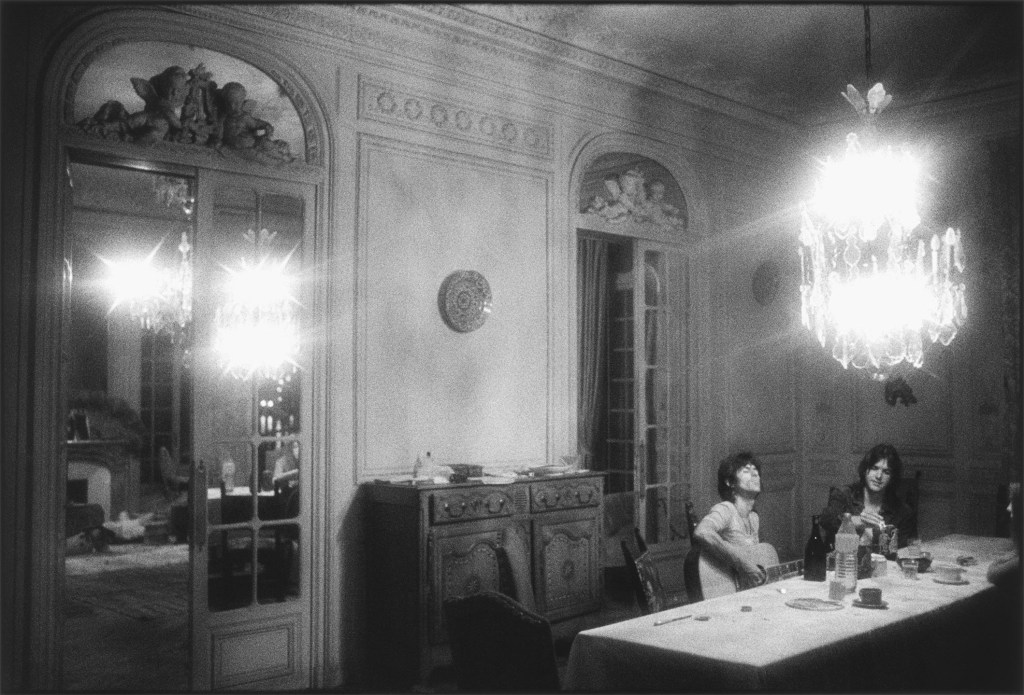
Keith Richards and Gram Parsons, 1971. Photo by Dominique Tarlé.

TCMFF: Ain’t Nothing but a Good Time

The return of TCM Film Festival following a pandemic-induced two year absence was always going to be an experience, but even I — who always has a ton of fun during the festival — did not expect to have the obscenely good time I had. Although I had barely socialised and not travelled since October 2019, my decision to break the ice by flying halfway across the world was an extremely chilled experience. To be honest, any residue anxiety dissipated the moment I sat on the plane. It was definitely foreshadowing; I laughed and stayed up until 2am most nights and watched a bunch of films with my friends and it was therapy. There are so many anecdotes and in-jokes I that have nothing to do with the festival (most will not be revealed on this blog, lol, others will be shared elsewhere), but here are some bits and pieces and photos and things from festival week:

Films I watched:

Dinner at Eight (1933)
All of Me (1984)
Miracle Mile (1988) — I keep falling asleep and jolting awake during the midnight screening which added to the experienced of an already excellent film!
Three on a Match (1932)
The French Way (1945)
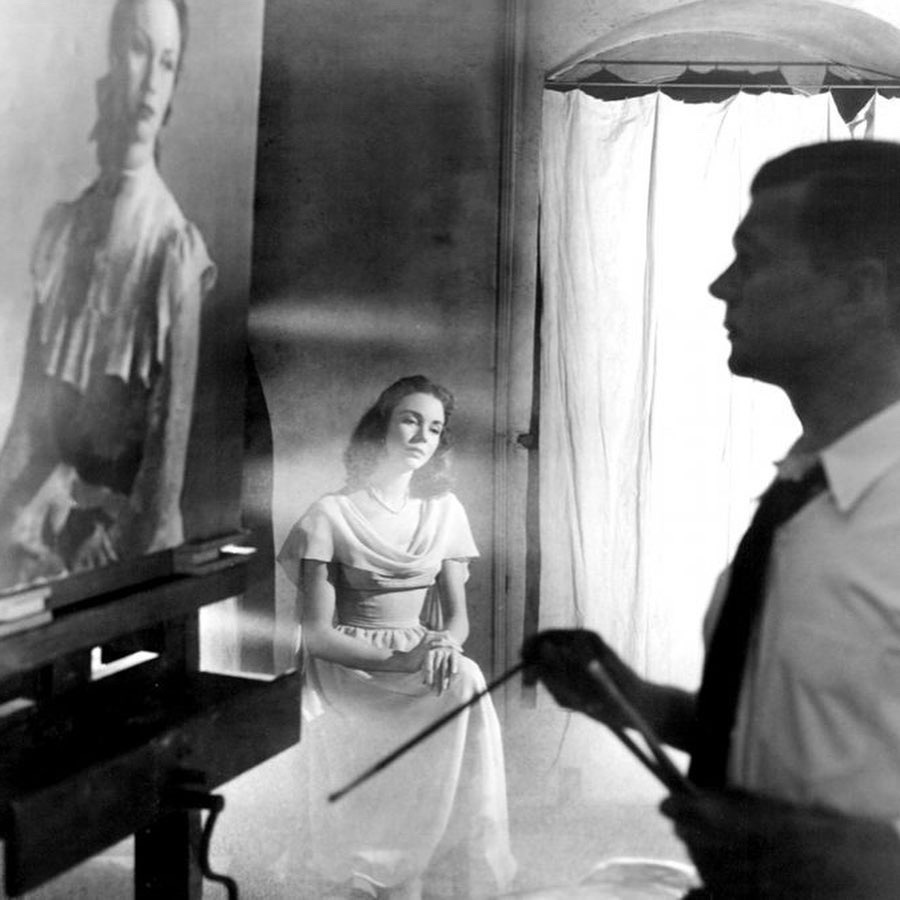
Portrait of Jennie (1948) — this left me rapt and I’ll be writing about for my next newsletter (currently in the works!)
Polyester (1981) — a midnight screening in Odarama with Mink Stole in attendance!
Peggy Sue Got Married (1986)
7th Heaven (1927)

Portrait of Jennie, Dir: William Dieterle, 1948.

Other highlights during festival week included:

Boardner’s! So many great nights (and an afternoon waiting for it to open) at our favourite bar/the best bar in Hollywood.
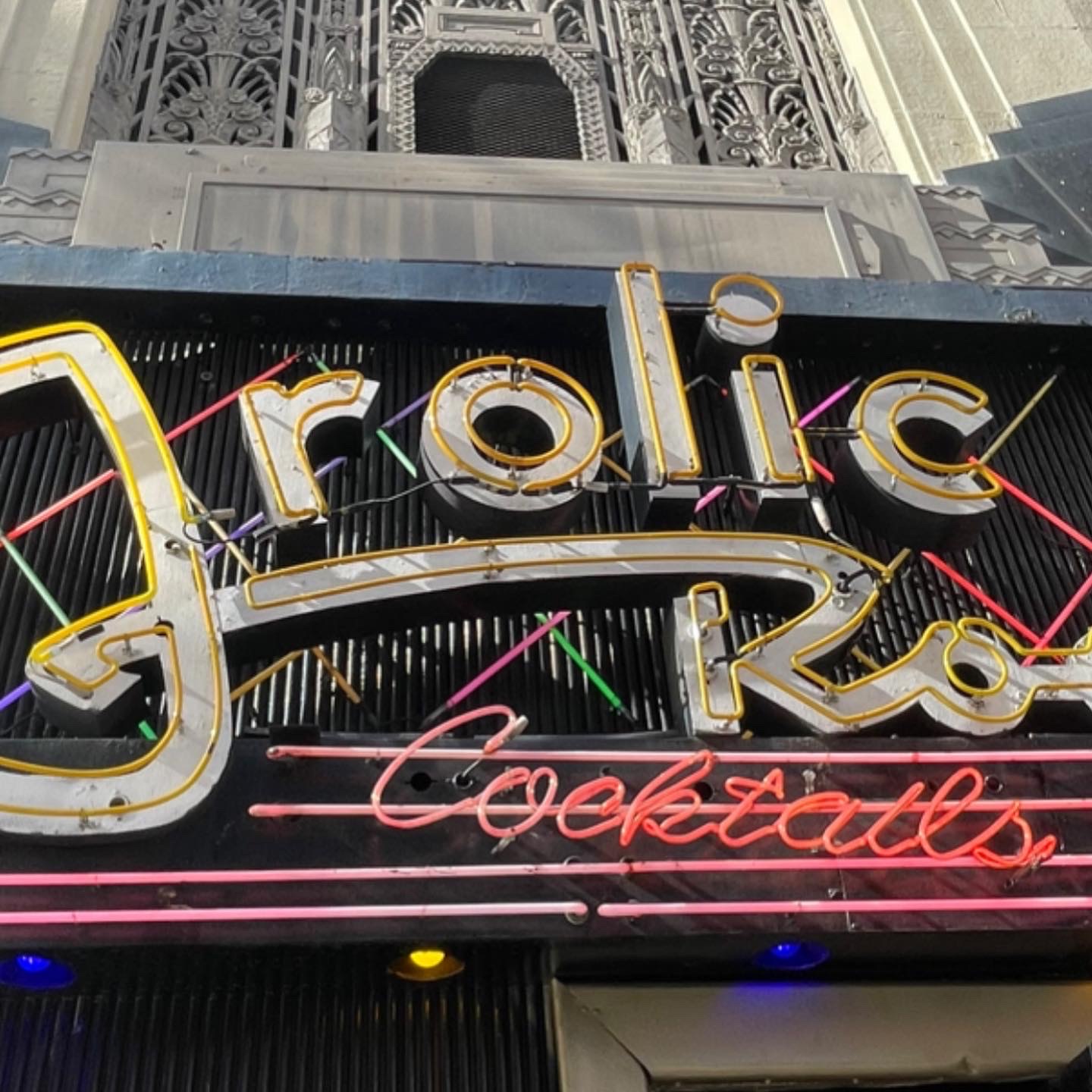
An afternoon trip to the Folic Room.
Sneaking selfies at The Hollywood Museum.
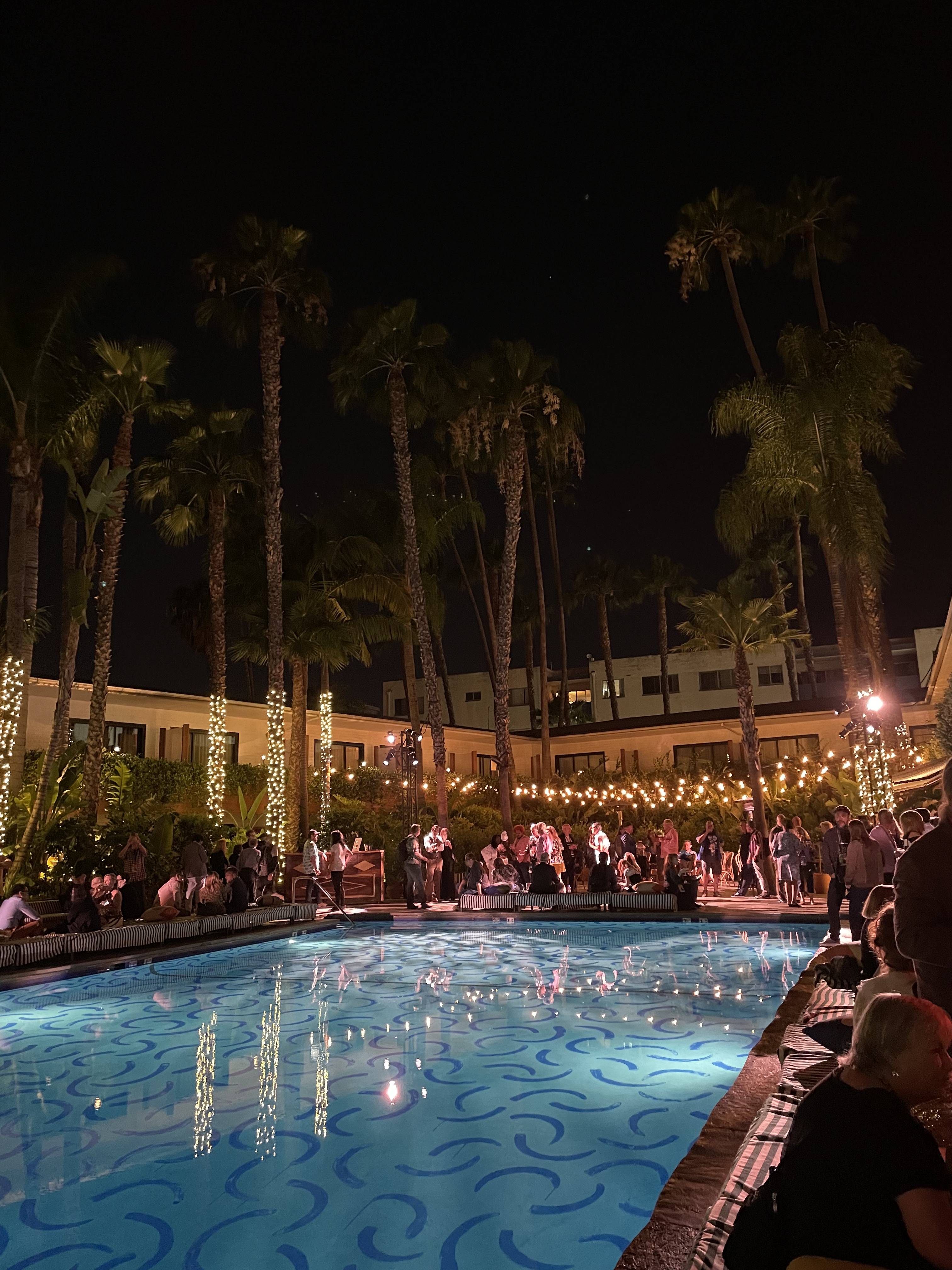
The TCFMFF closing night party was poolside at the Roosevelt this year (instead of cramming us all in the ballroom) which was nice. I kinda wanted someone to fall in to REALLY make it a party!
Midnight fries at In-N-Out Burger.
Waiting for Boardner’s to open with Jessica and Brandon.

This year’s festival was catharsis, and it was greatly needed. Love to all those I hung out with, ate dinner with, gossiped with, and with whom I had the best time. Yes, I did stay on in LA, and I’ll probably write something about moments from my extended time in the city, too. But as for TCMFF, until next time x

Take Me Down To The Paradise City

The Sunset Strip, 1.5 miles stretching from Sunset Boulevard through West Hollywood, has a decades long history of excess and debauchery. Originally situated in a geographically unincorporated area of Los Angeles, the area did not become part of Los Angeles until 1984, the independence and loose regulations serving to heighten the excess of the area. Integrating into the wider, more regulated city, did little to quell the outsider, renegade atmosphere for which the area had become known. Stories abound about the Strip, for which it most affectionately dubbed. Fast-living and degeneracy is baked into the streets, and in the bricks of the buildings which line the mile. 

Photo via /IG: laexplained

During the prohibition of the 1920s, alcohol was illegal in Los Angeles as a city, but not in the LA county. Casinos and nightclubs sprung up on The Strip, all serving alcohol out of their back rooms, away from the prying eyes of the law. In the 1930s and 40s, the movie world and organized crime intertwined, with the Bugsy Siegel and Mickey Cohen were rumoured to have owned establishments, while individuals from the motion picture industry frequented restaurants including Ciro’s, and The Mocambo. By the 1960s, it was all about the music, as movies gave way to counterculture. From the 1960s and into the 1970s also saw the swell of music venues on the Strip, which such historic clubs and Gazzari’s (21 February 1967 – 1995), The Whisky A Go-Go (Janauary 1964 — ), The Roxy (23 September 1973), and Pandora’s Box, a well-liked coffee shop that has gained immortality as the centre of the Sunset Strip Curfew Riots in November 1966, as immortalised by Buffalo Springfield in their song ‘For What It’s Worth.’ While the seventies saw glam rock and the short-lived club Rodney Bingenheimer’s English Disco, the 1980s saw an explosion of fast living, party hard, rock musicians for which the territory became their domain.

Historically, and musically, it is impossible to disconnect The Sunset Strip from the glam metal, hard rock, and ‘hair metal bands’ that came of age during the eighties. LA Guns, Mötley Crüe, Quiet Riot — the Strip came to represent rock n’ roll abandon thanks to the bands who took advantage of the venues ‘pay to play’ policy’, toiling their wears and accumulating their loyal attendees through blood, sweat, tears, and masses of drugs and alcohol. I spent some time earlier this year working on two (rejected) pitches concerning bands with more than a prominent association to The Strip, and how this area factored into their lives and music. This may come as a surprise to most of you, but neither of these two pieces were about Guns N’ Roses. And no other band came close to touching the full-on, all-out hedonism quite like their seminal 1987 debut, Appetite For Destruction.

There has never been another band quite like Guns N’ Roses, especially during the 1980s. While the line-up has gone through various rotations over the years — three of the original members are, after years of upheaval, performing together again — I maintain that you cannot touch the combination the of original five and the perfection of Appetite For Destruction, a record that never, in my opinion, becomes tiresome listening. (If you ask someone if they like Guns N’ Roses, most often they will say, yes.) There remains a magic in that album, something both raw yet harmonious, chaotic, energetic, but musically and lyrically electric. Success did not come easy to those five boys, and every moment of toiling away, every drug use, sexual encounter, domestic disturbance, and disregard for authority is captured within those twelve songs. There’s a reason it shattered all records and continues to be listed as one of the best, and best debuts, of all time.

Lately I have found myself struggling to write about what I usually write about (something compounded by freelance stress) as I tie myself in knots seeking work that will, you know, pay my wage. Music has always been a crutch, but never more so than during the past two years. As I have said on Twitter, and in a newsletter from earlier in the year, hard rock has always been at the forefront of my life, very much like film, and even longer than my interest in art history. I never set out to specialise in what I do, which I love, but I think the pandemic and grief have both rewired my brain into clutching at the non-work things that make me incredible happy. Music makes me happy. The Sunset Strip history makes me happy. ’80s era Guns N’ Roses make me so goddam happy — let me find joy as the world crumbles, ok?

So I may use this space to write about this album, this band, and what makes it the band and album for me. I will likely write about other bands. too, and maybe at some point on the newsletter, but I have this space, and I may as well use it, right? Short pieces, long pieces, whatever — I’m amazed I have not done this before. But it’s never too late. And, let’s face it: Anything Goes.

Photo via /IG: thesunsetstrip

The LA Diaries 2019 #5: TCMFF Day 2

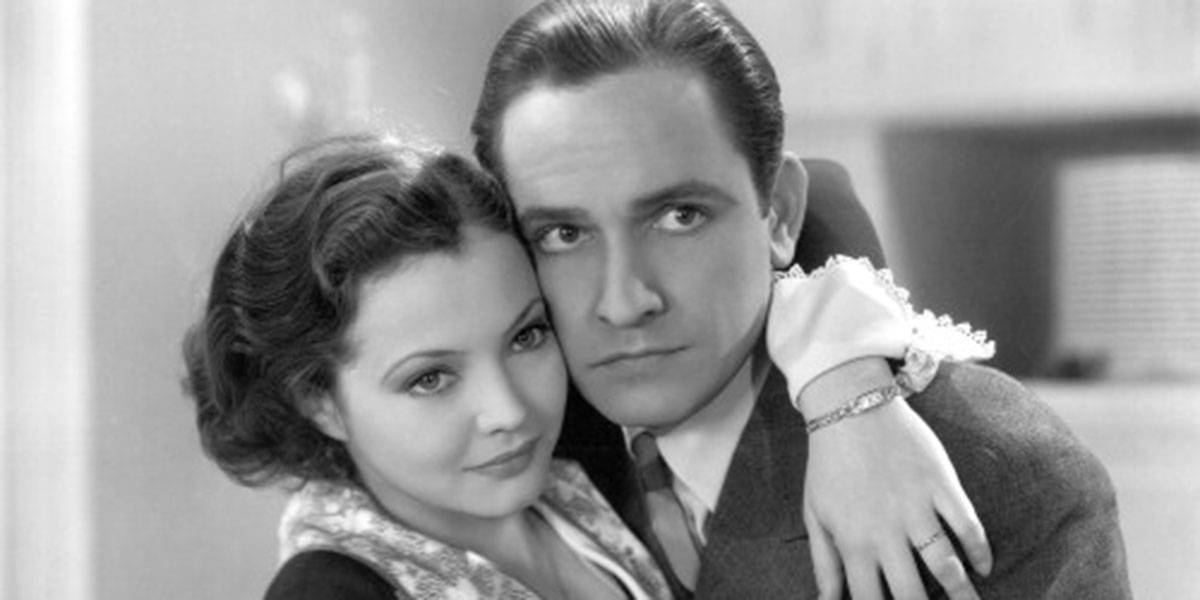
The first full day was five-movie day of joy beginning with the delicious Merrily We Go To Hell at a packed Egyptian Cinema. Sylvia Sidney and Frederic March in Dorothy Arzner’s pre-code based on Cleo Lucas’ 1931 novel called I, Jerry, Take Thee, Joan. Reporter and playwright Jerry Corbett and heiress Joan Prentice marry after a whirlwind relationship, toasting their nuptials “Merrily We Go To Hell,” which more than sets the tone of their marriage. As Jerry’s success increases, so do his alcohol addiction and Joan’s heartbreak, while the loose rules of their ‘modern marriage’ only aggravate the physical and mental decline of both. The movie is heartbreaking and gut-wrenching at times, and I absolutely loved it.

merrily_2.jpg

That was followed up with one of my all-time Disney faves, Sleeping Beauty, which provided the perfect opportunity to see my girl Maleficent in all of her resplendent glory. I think i was the only person who cheered when she came on screen…and it was lovely to have the animators Jane Baer and Floyd Norman in attendance, who shared their memories of working on the movie as Disney in-house animators.  (ND’s photo came out better than mine!)

Onto Sunrise, a movie I had not seen for some time but continues to mesmerize, which I followed with the powerful, always impactful Do the Right Thing at the IMAX. I was excited for this one, not only because I had never seen Spike Lee’s groundbreaking movie on anything other than a television screen but for the pre-movie discussion with costume designer Ruth Carter, Joie Lee, and casting director Robi Reed. 

Lk%wWE+aTUmXyvd7DqIvuw

Walking out of the movie at 11pm in a little daze following the power Do the Right Thing continues to hold, it was straight back into the TCL multiscreen for some midnight fun. I was determined to do both midnight movies this year, cramming in as much of the festival as possible and they did not disappoint! Two very different movies playing on the Friday and Saturday night that attracted a loyal following and entertaining audience reactions. Santo vs. the Evil Brain was the Friday night showing and my very first Santo movie. A joy from start to finish starring the Mexican wrestling champion who is practically a superhero encountering his own brainwashed brain! See, a joy! Plus, the movie had one of the best car chases I had seen onscreen (not for any of the reasons you may think, and not what you would expect for a ‘chase’, but it was fantastic). Masks and treats were handed out before the movie, and we whooped and cheered the whole way through. A fun day.