Noirvember – Day 3 (Black Angel, 1946)

black-angel-001

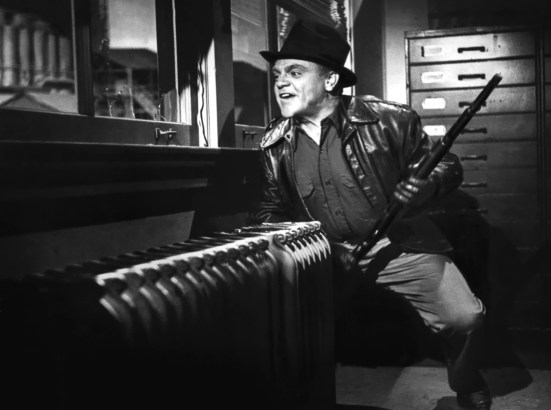
In an apartment dripping with indulgence – crystal chandeliers, fur rugs, jewels and perfectly lined-up ornate perfume bottles – lies the dead body of singer Mavis Marlowe (Constance Dowling). An unfired gun lies nearby and an expensive broach has been purloined by the murder. Three men visited (or attempted to visit) the singer in her double monogrammed apartment that night: her alcoholic ex-husband/composer and pianist Martin Blair (Dan Duryea) who is determined to win her back, shifty nightclub owner Marko (Peter Lorre) and lover Kirk Bennett.

Blame instantly falls on Bennett, caught fleeing the scene moments after Marlowe’s death, killing the chanteuse before she could divulge their affair to his wife Catherine (June Vincent) in all of its scandalous glory  The Police are convinced that they have found their man – Bennet’s fingerprints are all over Miss Marlowe’s gun – yet Catherine is determined that her husband is innocent. Blair has an alibi, his drunken binge that evening ended with him locked into his apartment by his building’s clerk, which only leaves Marko. Posing as a musical act, ex-singer Catherine and Blair become regulars at Marko’s club, earning his trust and closing in on the safe, which may or may not, hold the only evidence that will spare Bennett’s life.

Lorre does not have to do much in Black Angel, a film based on the work of Cornell Woolrich, yet it is impossible to take your eyes off him when he is on screen. His character is far from wholesome yet there is likeability to him – who can resist those hang-dog eyes? He is perfectly cast as the nightclub owner whose hands are far from clean. Duryea makes a convincing drunk (no-one intoxication quite like Duryea), which is frequently heightened by flashbacks and hallucinations, the unsteady camera-work accurately conveying the nausea and queasy feeling that is common of imbibing too much strong alcohol.

There is no denying that the women in the film are superb: Dowling is on wonderfully bitchy form as the demanding Marlowe, bossing her assistant and ruling her narcissistic apartment like a true diva. Yet it is Vincent who the film belongs, her transformation from housewife in dowdy clothes (if that is even possible in a film noir) to stunning lounge singer with eyes as glittering as the missing broach. She could have played the role as a frantic, desperate wife, yet she is composed, in control and more than capable when pitted against Lorre.

Black Angel may be lesser known when viewed against Lorre’s formidable body of work, yet it is perfectly indulgent film noir.


*This is a modified, slightly tidier version of a post that appeared on my old website (silverembers.com) on 20 September 2014. I don’t use that site anymore, so please continue to follow me here instead! Thank you.

Noirvember – Day 2 (Fur Envy)

joan-crawford-mildred-pierce

Joan Crawford: Fur Goals

The time has come to dig out my winter coat. It’s a shortish, greeny-blue, faux-fur number and I have had it for five years. When it is cold I want to sleep wearing it, and I hate taking it off once indoors. It becomes second skin from November until March. Winter is a sartorially fun season – lots of layering, fabrics, accessories and jewels – and it’s easier to up the glamour stakes. My rules are: the fluffier, bigger, warmer and cosier the item the happier I feel. I love the Film Noir Femmes who enter a room dripping in fur and pearls and hats and carrying a muff (no sniggering at the back). Luxuriant, indulgent, decadent. In my head I resemble Joan Crawford in Mildred Pierce, but in reality I’m Jane Lane.

Noirvember – Day 1 (Intro)

normadesmond

It’s that time of year again: the clocks have turned back, the nights are drawing in, and I resemble a walking mass of scarves. Halloween, All Souls, Los Dios Del Muertos, All Saints, Bonfire Night (personally not a fan of fireworks because of the cats) and Noirvember.

Yes, I spelled that right. Not November but Noirvember. For those new to the idea, Noirvember is the brainchild of Ms Marya Gates (film historian, blogger and social media genius for TCM and Filmstruck), and is now in it’s seventh year. It’s joyous: a month-long tweet-athon, blog-a-thon, talk-a-thon, watch-a-thon encompassing all things Film Noir. If you search the hashtag on twitter or Facebook – or even on wordpress – you will see how much the ‘event’ has taken off.

So, this year, instead of sporadically watching the films and occasionally tweeting about them, I have decided to join in. Everyday I will post something here to celebrate this most delicious of seasons. It may be a long piece of short, a review of a film, a photograph – or even an item of fashion – but I will engage with the hashtag and blog daily for the entire month.

I hope you enjoy this little foray. Welcome to the dark side…


* I decided to blog about #Noirvember this morning, at 8am, on a whim (impulsiveness is my forte). Therefore, this post is for yesterday. Please pop back for today’s post.

Leonor Fini: The Sphinx of Surrealism

*A reblog to honour Leonor Fini’s Birthday*

Sabina Stent's avatarThe Surreal Atelier

Welcome to The Surreal Atelier! I decided to launch this website on this particular date, 30 August, to celebrate and honour Birthday girl Leonor Fini. Here is my tribute to one of Surrealism’s most exhilarating artists.

Leonor Fini by Carl Van Vechten (1936)

“While still a child, I discovered the attraction of masks and costumes. At fourteen, I walked through the streets of Treiste with a girl of my age, with foxtails stolen from our mothers sewn to our skirts. To dress up is to have the feeling of changing dimension, species, space. You can feel like a giant, plunge into the undergrowth, become an animal, until you feel invulnerable and timeless, taking part in foreign rituals”. 1

Of all the Women Surrealists who I have ‘met’ over the years (and I love them all dearly), Leonor Fini captivates me the most. Her persona, her art, her world…Fini spun an existence where women…

View original post 1,188 more words

Book Review – Picasso: The Artist and His Muses (Editor: Katharina Beisiegel)

61RRaldykKL._SX398_BO1,204,203,200_

According to Naomi Segal, ‘muses stand for the eyes downcast, the body proffered somewhere around the navel, mindless, organless, giving, an inspiration at the price of being fast-frozen. No, if she darts, glances or wiggles violently, she is no muse’. [1] In my 2012 thesis, “Women Surrealists: Sexuality, Fetish, Femininity and Female Surrealism”, I argued for the women of the movement; how the art they created was more powerful and far greater than that of their mates. These women, through their presence and formidable talent, confronted preconceptions and traditional muse stereotypes, challenged masculine imposed labels and asserted their independent artistic authority:

In retrospect, however, what appears just as relevant is that this creature, as the male artist’s muse, was relied on as much by her mate as she relied on him; the male Surrealist was dependent on her presence to fuel his creativity and he would have been unable to fulfil the creative potential of the great Surrealist mission without her company. [2]

Far from being a role of condescension, muses hold great artistic power. As Patricia Allmer, in reference to Lee Miller, has stated: ‘the muses do return as outstanding artists’. [3] These women – these muses – are catalysts: they have initiated and inspired some of the greatest works of art, determined career trajectories and provided spouses with creative motivation. The career trajectory of Pablo Ruiz y Picasso would have been very different without the influence of six particular women in his life: Fernande Olivier, Olga Khokhlova, Marie-Thérèse Walter, Dora Maar, Françoise Gilot and Jacqueline Roque.

The Vancouver Art Gallery’s current exhibition,‘Picasso: The Artist and His Muses’ (11 June 2016 – 2 October 2016, created by Art Centre Basel, curated by Katharina Beisiegel and produced in collaboration with the Vancouver Art Gallery) puts these women at centre stage. Together with the accompanying book from Black Dog Publishing, essays by scholars, curators and art historians provide a chronology of Picasso’s life and art detailed through rich, densely informative academic papers in a combination of biography, art history and critical theory. The book included two forewords, an introduction and six chapters.

Picasso’s narrative begins with Fernando Olivier – ‘his first great love’ – who escaped a violent marriage and found success in Paris as an artists model. They became a couple in 1904, and her only duty was to be Picasso’s muse: no domestic chores or sitting for other artists. Together until 1912, their artist/model union kickstarted Picasso’s creativity, lifting him out of his Blue period and into his Rose period. She was the catalyst for the Cubist movement, Les Demoiselles d’Avignon (1907) and inspired Head of a Woman (Fernande) (1909).

In 1917 Picasso met ballet dancer Olga Khokhlova. Part of the Bellet Russe, Olga had scandalised audiences when cast as an adolescent in The Rite of Spring: Pictures from Pagan Russia in 1913. They married and had a son, Paul, and he would paint her seated, in ballet pose or with their child: mother, muse and dancer, a vision of maternal femininity. Olga was a keen photographer and her thousands of images – documenting the artist at work, their family on holiday or at play – continue to provide a unique, priceless record of the artist’s private life. Dora Maar was to continue this tradition.

Picasso began his affair with Marie-Thérèse Walter, the 17 year old who he first saw standing outside a Paris department store, in 1927. Their liaison, conducted in secret at first, saw the frustrated artist lovingly include her initials in his paintings, lovingly entwined for all to see. Their late 1920/early 1930s union saw Picasso experiment with depictions of the female body while Marie-Thérèse’s youth and vigour, evident through the bright colours and rounded curves, inspired some of Picasso’s most sexual and erotic imagery, including his Bathers series and Nude, Green Leaves, and Bust (1932). Their daughter, Maya, was born in 1935.

This same year Picasso’s walked into Paris’ Les Deux Magots and set eyes on the Surrealist photographer Dora Maar. Their well-documented introduction, initiated by Paul Eluard, was the start of a passionate, volatile relationship between two brilliant artists who collaborated and influenced each others work: she dabbled in painting while he experimented with photography. Dora’s unusual beauty and temperamental personality (she suffered from depression) challenged Picasso as a portrait artist, leading him into more Surrealistic styles of painting. Picasso called her a genius yet she is often reduced to The Weeping Woman after the infamous 1936 portrait that captured her in complete mental anguish. This relationship was rooted in war – both internal and on the streets – and Picasso’s work takes on an element of violence during this time. Dora assisted with his seminal work Guernica, and she can be seen in the painting, her distorted face and tears representing both the agony of political suffering and her pain of loving a man sharing himself between lovers (Picasso continued see his ex-partners and their children). Their relationship was to end alongside the war.

The calm era signalled the arrival of Françoise Gilot. The young art student, who became the mother of his two youngest children, would latet pen the book, “Life with Picasso”, detailing her time with the artist. During this time Picasso’s art took on a peaceful, almost serene, nature and he rediscovered his love for the lithograph technique. A family visit to Vallauris in the South of France ignited an interest in ceramics – he thought nothing of using his son, Paulo’s, toys for his assemblages – and two years later, 1948, his first ceramics exhibition was held. As a subject, Françoise is slightly cut-off and more unreadable than Picasso’s previous lovers, with an independence and steeliness separating her from the outside work (and her family). Less submissive and more determined than his previous partners, she kept something of herself hidden throughout their relationship, and never entirely relinquished herself to him. She stated: “I had known from the start that what principally appealed to him in me was the intellectuals side and my forthright, almost tomboy was of acting, my lack, in a sense, of what is called ‘femininity’”

Picasso’s final years were spent with Jacqueline Roque as the chapter examines how Picasso’s inspiration was as much from the history of art as it was from wives, mistresses and models.  Tribal masks and African art greatly influenced Picasso during this time, and the book’s concluding chapter, rooted in the theories of French ethnographer Michael Leiris, examines his various muses and inspirations during the final years of his life. Picasso’s art became transformative as he reimagined and reinterpreted of the work of old masters through contemporary art. The muse’s portrayal was also effected. Jacqueline’s identity, which would have previously been so individual and realistic, dominating the image with personality and vitality, fades into the image as she loses her individuality. It is not her story, her face on canvas; she has become absorbed into Picasso’s narrative.

Without having attended the exhibition, it is difficult for me to say how it compares to the book and vice-versa. However, this is a superb piece of work – either to be read as a companion to the exhibition or independently – demonstrating the complexity of the muse and the fluid, constant reinvention of Picasso’s work. Each of these women were responsible for unleashing a fresh creative talent within the artist. These six women, this diverse group with their own unique temperaments and personalities, inspired Picasso and kept his art relevant.

Artists and their muses is a subject that will continue to fascinate because, deep down, the muse is never who she seems. There is always more to her than her appearance. She is inspiration, yes, but her own unique person – whether artist, dancer, mother or nurturer – with a powerful artistic presence. When you look at these women, whether on gallery walls, in books or on art documentaries, when you consider them and ponder their influence, they become elevated. These are the faces and the personalities who inspired masters and created their own art. Listen and look to these muses. They are the ones with stories to tell.


Picasso: The Artist and His Muses is on show at Vancouver Art Gallery until October 2, 2016. The accompanying book is out now, published by Black Dog Publishing


[1] Naomi Segal, ‘Who Whom? Violence, Politics and the aesthetic’ in Jana Howlett and Rod Mengham (eds), The Violent Muse: Violence and the Artistic Imagination in Europe, 1910-1939 (Manchester University Press: Manchester and New York, 1994), pp. 141-149, (p. 141).

[2] Sabina Stent, Women Surrealists: Sexuality, Fetish, Femininity and Female Surrealism, Ph.D. thesis, University of Birmingham, (2012), p. 7.

[3] Patricia Allmer (ed.), Angels of Anarchy: Women Artists and Surrealism (Manchester: Prestel, 2009), p. 16.